

Poonam Sharma
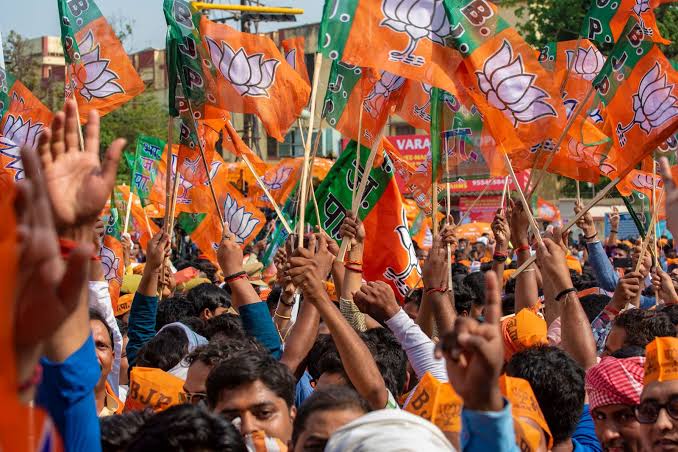
India is about to embark on a delimitation exercise that will redraw the country’s electoral map, a process that has always carried profound political implications. Basically, delimitation is the process of equalizing the population of different constituencies, so as to maintain the demographic balance and the principle of “one person, one vote”. However, the process is now at the center of a furious political row with opposition parties expressing serious concern that the new boundaries could tilt the scales even more in favor of the Bharatiya Janata Party (BJP).
What is Delimitation? Why is it Important?
Delimitation is the process of redrawing the boundaries of constituencies for Lok Sabha and state assemblies, based on the latest census figures. The guiding principle is demographic parity—the idea that each legislator should represent a comparable slice of the population. India’s last major delimitation was done in 2002 on the basis of the 2001 Census and the next is expected after the 2026 Census.
The Politics At Stake
The new delimitation exercise is believed to be most beneficial to the BJP, the most dominant political force in India today. This is due to population movements and demographic changes that have taken place over the last several decades. There has been a significant population growth in BJP strongholds of north and western India, Uttar Pradesh, Madhya Pradesh, Rajasthan and Gujarat. In the south and east, where regional parties or opposition are more present, social measures have succeeded in controlling the growth of the population.
The proposed demarcation could mean that states with larger populations get more seats while states with stable or declining populations lose out. That could change the power balance in the Lok Sabha in the core states of the BJP.
Concerns of Opposition Parties
Several others, including the Samajwadi Party (SP) and the Trinamool Congress (TMC) have aired their apprehensions publicly. One of the main concerns is that delimitation will change the boundaries of many constituencies where Muslim candidates and other minorities have been steadily winning elections for decades. In some constituencies the same community has been in power for 30-40 years. There is concern that merging or splitting these constituencies could dilute the minority vote, and thus reduce their political representation.
Also, the opposition parties are of the view that the Delimitation Commission is a central government body and can be influenced to draw boundaries in such a way that it breaks the opposition vote banks and consolidates BJP’s support bases.
Balancing Demographics or Political Engineering?
The stated purpose of delimitation is to ensure fair representation, but critics argue that the timing and execution often reflect the political interests of the ruling party. The BJP has a lot to gain especially with its organizational strength and popularity in high population states. This could also result in further marginalization of regional parties and opposition groups, especially in states that have traditionally sent non-BJP representatives to Parliament.
Some political analysts say this could threaten the federal structure of India as states that have promoted family planning and demographic control could be “punished” with a loss of seats while those with unchecked population growth are rewarded with more political power.
Effect on Minority Representation
The most sensitive aspect of the delimitation debate perhaps is its impact on Muslim and other minority communities. Seats that have had continuous minority representation could be absorbed into larger, more diverse constituencies, making it harder for minority candidates to win. This could further polarize and create a sense of disenfranchisement among communities affected.
A Test of Indian Democracy
The upcoming delimitation is not just a technical exercise, but an acid test of India’s democratic ethos. Will the process ensure true representation for all or will it become a mechanism of political hegemony? With the debate still raging, the Election Commission and the Delimitation Commission are under pressure to do their jobs impartially.
Delimitation is necessary for the health of democracy but it needs to be done transparently and fairly. The fears of the opposition parties are about very real possibilities of change in political power. The challenge for India will be to ensure that political expediency does not trump the spirit of democracy, as the changes are likely to benefit the BJP.
