
Elderly Delhi Couple Loses ₹30 Lakh in Digital Arrest Scam
Fraudsters posing as NIA and ATS officers allegedly kept the couple under surveillance for seven days

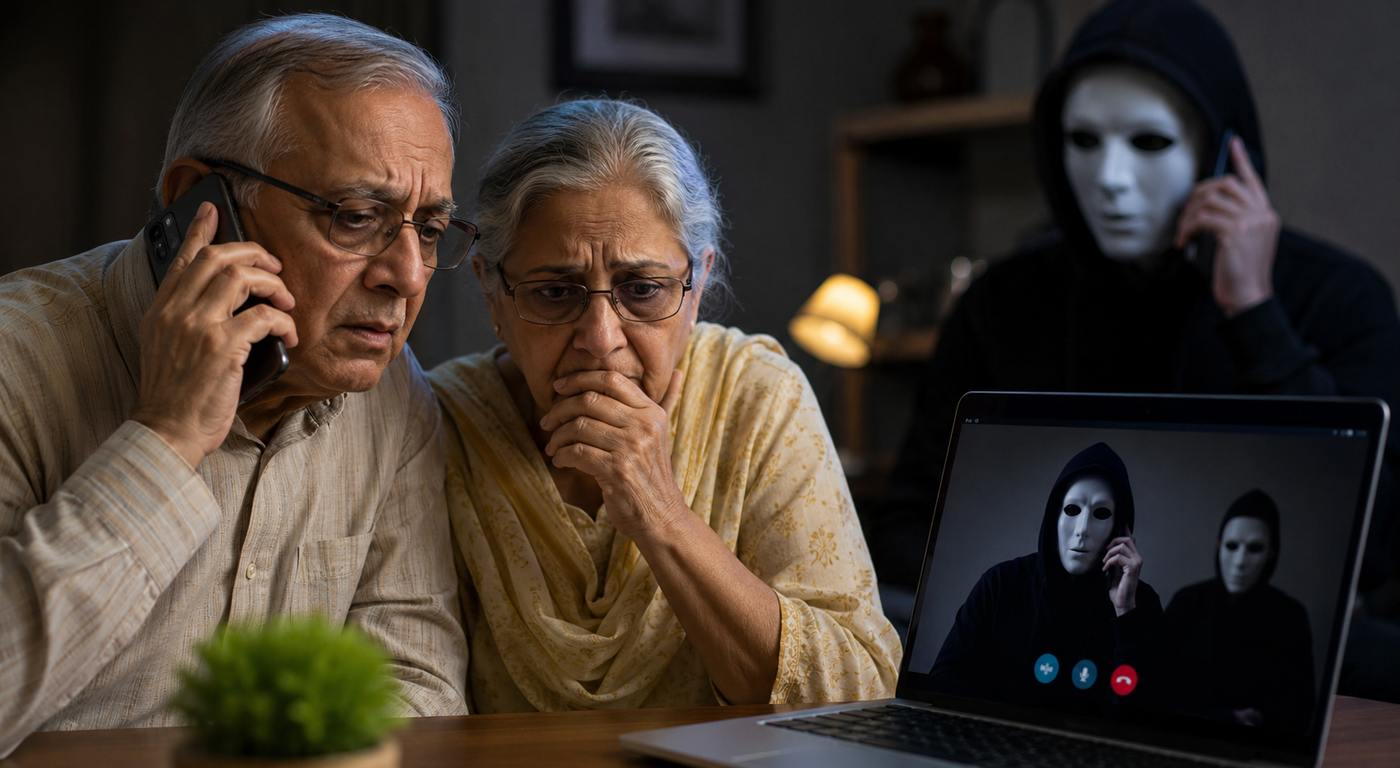
- Fraudsters allegedly linked the man’s bank account to the Red Fort blast.
- The couple was kept under phone and video surveillance for nearly seven days.
- ₹30 lakh was transferred in two instalments after threats and fake documents.
- Police recovered ₹12 lakh after tracing the money trail to a Haryana account.
GG News Bureau
New Delhi, 2nd Sept: A 74-year-old retired railway employee and his wife in Delhi were allegedly kept under “digital arrest” for nearly seven days by cyber fraudsters posing as National Investigation Agency (NIA) and Anti-Terrorism Squad (ATS) officers. The couple was duped of ₹30 lakh from their life savings, police said.
According to police, the incident began on November 23 last year when the Dwarka resident received a call from a person claiming to be an NIA officer. The caller allegedly told him that his bank account had been used to finance terrorists linked to the Red Fort blast.
The following day, the fraudsters allegedly contacted the couple through video calls. One claimed to be an NIA officer and another posed as an ATS officer. They allegedly told the victim that his account had been linked to blast accused Umar Nabi and others and threatened him with arrest.
The couple was subsequently kept under continuous phone and video surveillance. They were allegedly instructed not to contact their children or speak to anyone about the investigation.
The fraudsters also sent a fake “Confidentiality Agreement” through WhatsApp and allegedly collected details of the couple’s bank accounts, fixed deposits and other assets.
After several days, the accused allegedly told the victim that the investigation was almost complete but that his funds needed to be verified. He was asked to transfer the money to an account described as “RBI-approved”, with an assurance that the amount would be refunded after verification.
On December 3, the victim liquidated his fixed deposit and transferred ₹15 lakh through RTGS. Another ₹15 lakh was transferred the following day after the fraudsters allegedly demanded a second payment.
The accused subsequently sent a fake “Verification Letter” purportedly issued by the Reserve Bank of India. When they stopped responding to the victim’s calls, he realised that he had been cheated and approached the police.
The investigation was later handed over to the Crime Branch. Police traced one of the RTGS transactions in May to the bank account of “Shri Balaji Tractor”, held in the name of Sunil Singla of Fatehabad, Haryana.
Police said Singla’s account had allegedly been used in several cyber fraud cases, with transactions of nearly ₹1 crore across more than six cases routed through it.
Singla was arrested on May 11. During questioning, he allegedly told investigators that he had been seeking an online loan to expand his business when another person offered him a commission for facilitating large transactions through his bank account.
Police managed to block the onward transfer of one ₹15 lakh tranche and recovered ₹12 lakh, which was returned to the victim.
The case highlights how cyber fraudsters are allegedly exploiting fear surrounding high-profile crimes by impersonating law-enforcement officials and using fake government documents and threats of arrest to extort money from victims.
