
Indian Scientists Identify Potential Mars Analogue Sites
Researchers identify water-related minerals in Tamil Nadu and Chile, offering new clues to Mars’ geological history and potentially habitable environments.

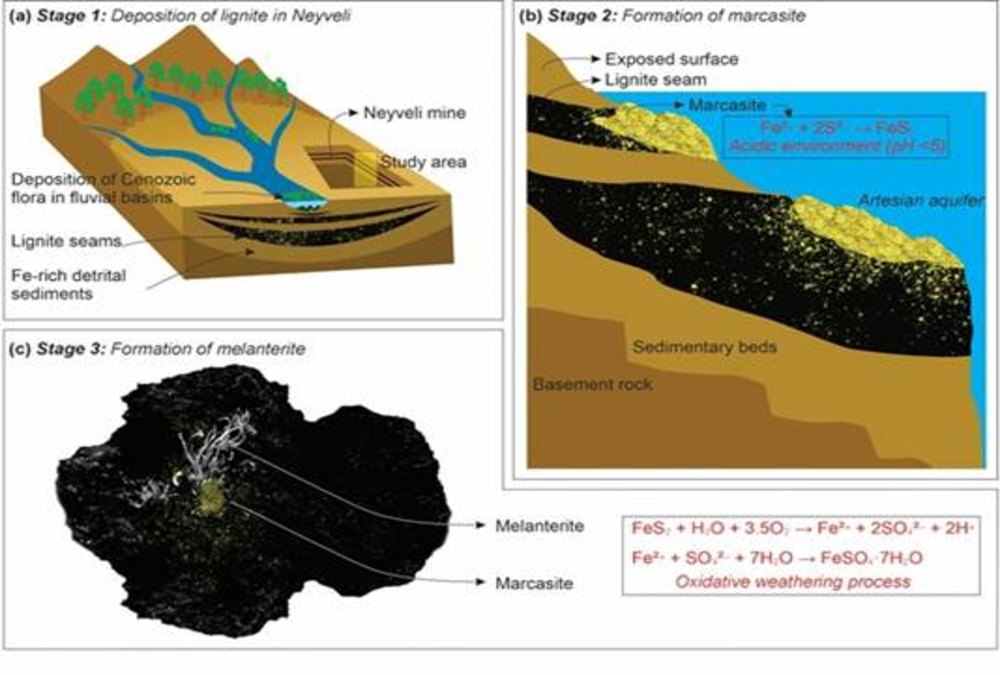
- Indian team identifies potential Mars analogue sites
- Melanterite found in Neyveli, Tamil Nadu
- Gypsum detected in Chile and Tamil Nadu
- Findings offer clues to ancient water activity
GG News Bureau
THIRUVANANTHAPURAM, 16th Oct: Indian scientists have identified terrestrial sites in Tamil Nadu and Chile that could help researchers better understand Mars, after detecting minerals that preserve evidence of water-related geological processes similar to those inferred on the Red Planet.
The research team from the University of Kerala identified melanterite in Neyveli, Tamil Nadu, and gypsum in the Atacama Desert of Chile and the Tiruchirappalli Badlands in Tamil Nadu. These hydrous sulphate minerals record interactions between water and rocks, offering insights into past environmental conditions that may also have existed on Mars.
The study was led by Dr Sajin Kumar K. S., Project Coordinator of the Department of Science and Technology’s Fund for Improvement of Science and Technology Infrastructure (DST-FIST). Researchers used a high-precision Laser Raman Spectrometer supported by DST-FIST at the university’s Department of Geology to identify the minerals through their distinctive spectral signatures.
According to the researchers, gypsum can preserve evidence of past aqueous environments and may retain biosignatures within its mineral structure. Melanterite, meanwhile, indicates short-lived wet, acidic and oxidising conditions associated with sulphide oxidation. These processes are relevant to understanding sulphate formation and the history of water on Mars.
The findings underline the importance of terrestrial analogue sites in planetary exploration. Scientists note that orbital observations alone cannot fully characterise Martian minerals, making detailed field studies and advanced laboratory analysis essential for identifying locations that may offer clues to past habitability.
The research has been published in two papers in the Journal of Geophysical Research: Planets. The team is now investigating rare analogue sites in extreme environments around the world to support astrobiological research and improve understanding of primitive life.
Researchers say facilities supported by DST-FIST can contribute to future planetary missions by helping identify minerals that record water activity and may preserve evidence relevant to the search for life beyond Earth.
