

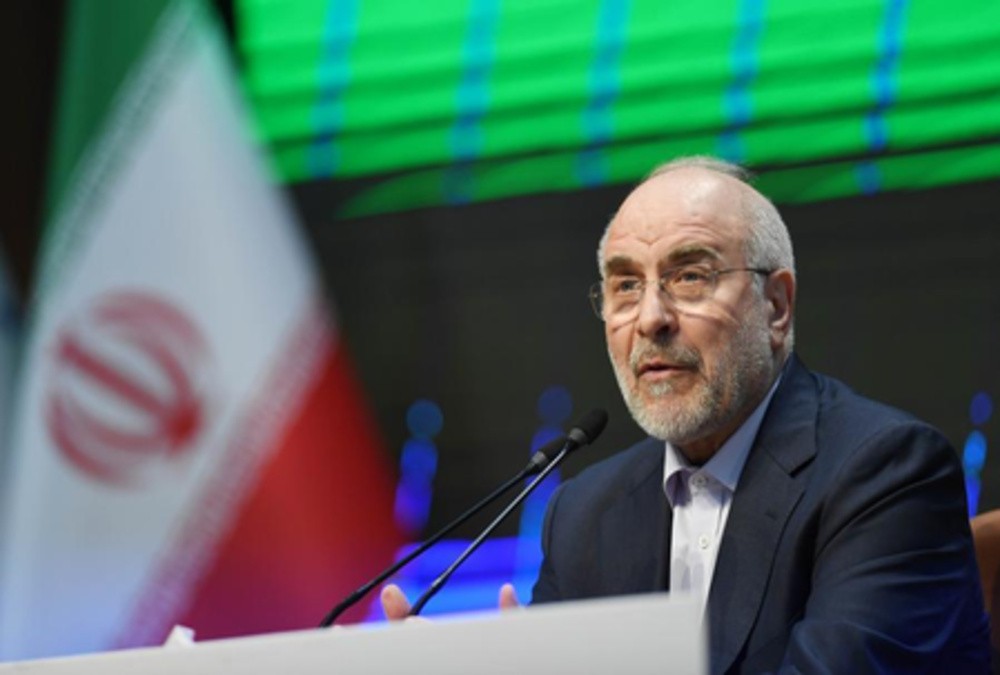
By Anjali Sharma
WASHINGTON – Iran Parliament Speaker Mohammad Bagher Ghalibaf on Sunday said, “In mediated negotiations, misunderstandings sometimes arose, such as on the issue of asset release. But in direct talks, we reached a clearer mutual understanding.”
Iran has sharply contrasted indirect, mediated negotiations, largely routed through Pakistan, with direct engagement, hinted that mediated talks in Islamabad contributed to ‘misunderstandings’ rather than clarity in the peace process with fragile US-Iran ceasefire talks inching toward an April 22 deadline,.
He underscored Tehran’s unease, Iranian Parliament Speaker Mohammad Bagher Ghalibaf said, “In mediated negotiations, misunderstandings sometimes arose, such as on the issue of asset release. But in direct talks, we reached a clearer mutual understanding.”
The statement came after scrutiny of Pakistan’s role in facilitating the recent high-stakes Islamabad talks between Iran and the United States.
Pakistan posed to be at the heart of diplomatic efforts to sustain dialogue between Iran and the US, hosting the first round of negotiations and working to extend the ceasefire beyond April 22.
The talks, spanned over 21 hours, failed to produce a breakthrough, with key disagreements persisting over Iran’s nuclear programme and the Strait of Hormuz.
Islamabad positioned itself as a neutral bridge, Ghalibaf’s remarks suggested that the indirect format, where messages were often relayed through mediators, may have led to misinterpretations on critical issues.
He emphasized on “clearer understanding” in direct talks appears to draw a subtle distinction between outcomes achieved with and without intermediaries.
The developments complicate Pakistan’s diplomatic standing.
The efforts led by Islamabad to maintain momentum in negotiations have struggled after mistrust, conflicted narratives, and failed follow-up meetings.
Analysts noted that even broader mediation attempts involving regional actors have faced setbacks, exposing the limits of third-party facilitation in a deeply polarized conflict.
Ghalibaf maintained that Iran agreed to the ongoing two-week ceasefire only after its conditions were acknowledged by Washington, framing the truce as a strategic decision rather than a concession.
“If we accepted the ceasefire, it was because they accepted our demands,” he said.
He asserted that Iran continues to hold firm both diplomatically and militarily.
Ghalibaf added that national interests remain non-negotiable, declaring that there would be “no capitulation in the field of diplomacy.”
Iranian new leader also argued that the United States turned to indirect communication only after failing to impose its demands through military pressure, reinforcing Tehran’s claim of negotiating from a position of strength.
Ghalibaf’s remarks signal discomfort with the mediation process itself.
He highlighted “misunderstandings” in mediated talks and contrasting them with the clarity of direct engagement, Iran appears to be questioning the effectiveness and reliability of intermediaries.
The message is an indication that mediation may have muddied key negotiations at a critical stage.
Ghalibaf stressed that as the ceasefire deadline approaches, that distinction could shape the next phase of diplomacy, potentially shifting the focus away from mediated channels toward more direct, high-stakes engagement between Iran and the US.
