
Jantar Mantar Chalo: Techie Turns Protests Into Video Game
The 3D game by 27-year-old Suraj Kushwah lets players choose between reaching a protest site as demonstrators or stopping them as Delhi Police.

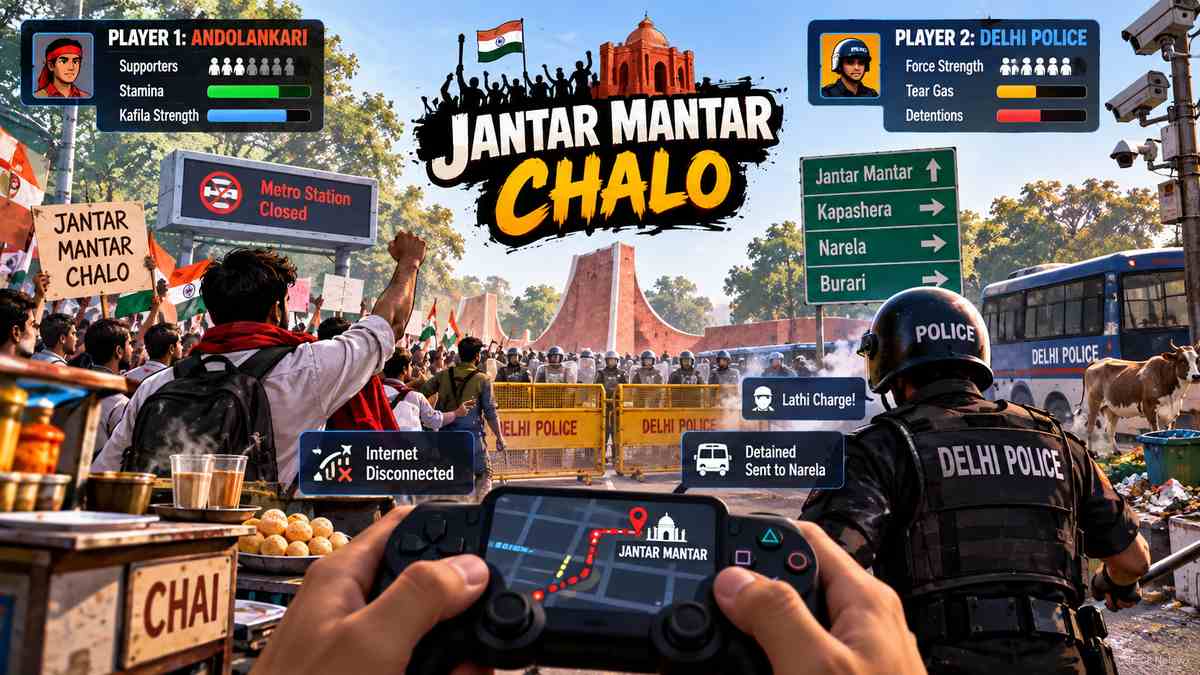
- Bareilly techie develops satirical 3D protest game
- Players can choose protesters or Delhi Police
- AI tools assist coding and artwork development
- Game combines political satire with Delhi’s everyday challenges
GG News Bureau
BAREILLY, 16th Oct: What if joining a protest did not require stepping onto the streets? A new video game, Jantar Mantar Chalo, offers players a virtual demonstration experience, allowing them to participate as protesters trying to reach Jantar Mantar or as Delhi Police personnel tasked with stopping them.
Developed by 27-year-old Suraj Kushwah, an IT professional based in Bareilly, Uttar Pradesh, the game turns the challenges of organising a protest in the national capital into a satirical contest. It comes amid a series of protest calls in Delhi and provides a virtual way to experience the tensions surrounding demonstrations.
Kushwah said that news coverage of recent calls for marches towards Jantar Mantar inspired him to develop a 3D game in which players navigate police deployments and attempt to reach the protest site. He said the situation in the national capital had caused discomfort for many people.
Kushwah, who uses the Instagram handle Bugswriter, works as a DevOps engineer at OnePlay.in and runs a Linux-focused YouTube channel with around 30,000 subscribers worldwide. He said Gen Z’s tendency to approach situations with humour and create content, along with the reels he had watched, also influenced his idea.
Although Kushwah studied game design in college, he used artificial intelligence tools, including Claude, to assist with parts of the coding process. Other tools helped create the artwork, while the core concept and gameplay design were his own. He also cited the online game Slither.io as an inspiration.
Two Sides of the Same Protest
Players can choose between two roles: an andolankari (protester) or a Delhi Police officer. The objectives differ depending on the side selected.
As a protester, the player must reach Jantar Mantar, recruit people to join the procession, navigate barricades and stage a dharna in the designated protest area for as long as possible. Building a larger kafila makes it easier to move forward.
The virtual march includes obstacles inspired by the challenges associated with demonstrations in Delhi. Players encounter notifications about metro station gates being shut, lathi charges and internet disruptions. Glitching pop-ups simulate connectivity problems, making progress more difficult.
Detention is another part of the gameplay. Players who fail to evade the police may be taken to locations such as Narela or the Kapashera border and must find their way back towards the protest site. Temporary detention centres, including the Burari and Kapashera grounds, also feature in the game.
Tea Stalls, Golgappas and Urban Satire
The game mixes political satire with familiar aspects of everyday life in Delhi. Players can stop at tea stalls for a brief break or eat golgappas to replenish their stamina. A gamchha can also be used to evade CCTV cameras.
The route to Jantar Mantar presents its own urban challenges, including potholes, overflowing garbage bins and cows blocking roads. Roadside food stalls offer occasional respite from the obstacles.
Players choosing the Delhi Police role face the opposite objective: preventing demonstrators from reaching the protest site. They can use lathis and tear gas, detain protesters and transport them in police buses.
By combining recruitment, barricades, detention and everyday urban inconveniences, Jantar Mantar Chalo turns a virtual march into a contest between two opposing sides. Its distinctive mix of gaming, humour and political satire offers players a way to explore the experience of a protest without physically taking part.
