
Madras HC Slams Use of Children in TVK Campaign Reels
Court calls the practice politically motivated and in bad taste but rules that it does not automatically constitute undue influence under election law.

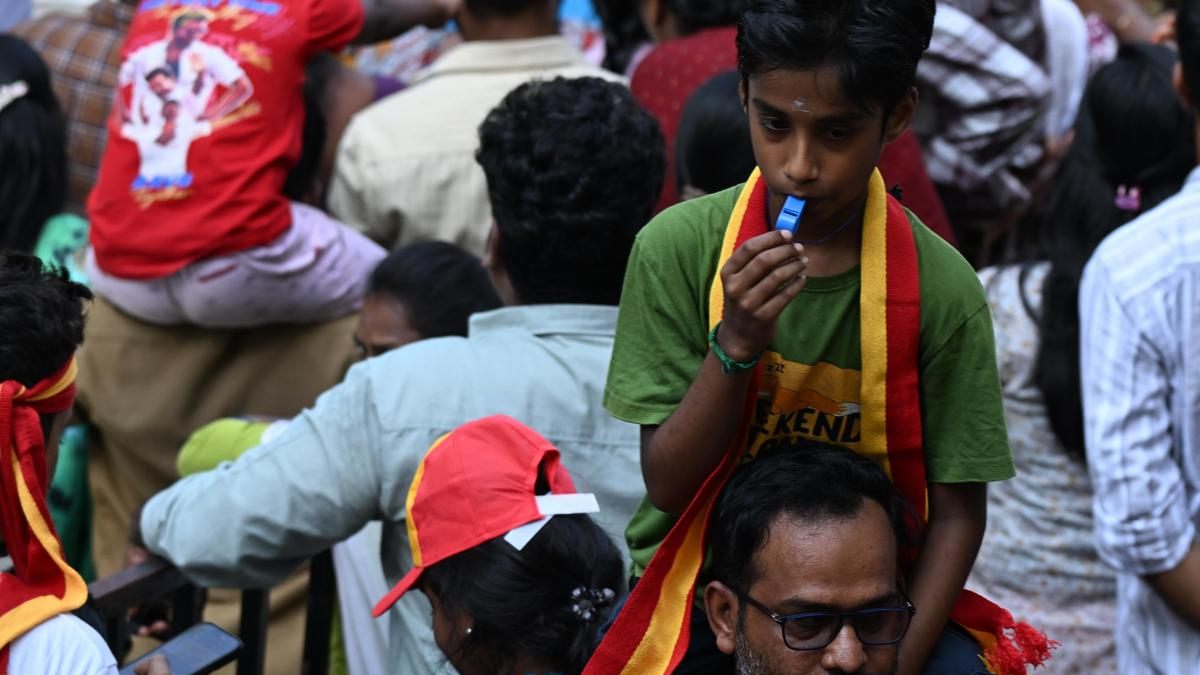
- Madras HC criticises children’s use in TVK campaign reels
- Court calls the practice politically motivated and inappropriate
- Parliament urged to debate possible electoral consequences
- Election petition against TVK MLA Sivakumar rejected
GG News Bureau
Chennai, 16th Oct: The Madras High Court has criticised the use of children in election campaigns and social media reels seeking votes for Tamilaga Vettri Kazhagam (TVK) chief Joseph Vijay and his party, describing the practice as politically motivated and reflecting poor parenting. However, the court ruled that such conduct does not automatically amount to undue influence under existing election laws.
Justice D Bharatha Chakravarthy made the observations while allowing an application by TVK MLA K Sivakumar seeking rejection of an election petition challenging his victory from the Salem North Assembly constituency in the 2026 elections. The petition alleged that children were used to campaign for the winning candidate.
The controversy arose from a speech delivered by Vijay at Chennai’s YMCA Grounds in Nandanam on April 21, ahead of the Assembly elections. According to the petition, Vijay urged children to persuade their parents and relatives to vote for TVK and its Whistle symbol, comparing the appeal to children repeatedly asking for chocolates and encouraging them to persist until their families agreed.
Several social media reels allegedly surfaced afterwards showing children pressuring parents and grandparents to vote for the party. The petition cited videos in which children allegedly threatened family members, including with violence or self-harm, unless they supported TVK. Other clips reportedly showed children shouting at or hitting relatives who favoured rival parties.
The court observed that young children were unlikely to have independently created and circulated such videos. It said adults appeared to have encouraged the children, recorded their actions and popularised the reels. Justice Chakravarthy described the involvement of young children in such activities as being in bad taste and criticised the conduct of the adults responsible.
The judge said the issue raised a wider question for Parliament to consider: whether using children to influence voting decisions should be prohibited or made a ground for setting aside an election.
However, the court distinguished objectionable campaigning from legally established undue influence. It held that exploiting family relationships to sway voting preferences did not, by itself, establish that an adult voter’s free will had been overpowered. Even if a voter cited pressure from children as a reason for supporting a candidate, the ultimate choice remained the voter’s own.
The court also noted that although Election Commission directions against involving children in election-related activities had statutory character, their violation was not independently listed as a ground for invalidating an election under Section 100 of the Representation of the People Act. It further held that Vijay’s appeal, made in his capacity as party president, could not automatically be attributed to the constituency candidate or his election agent as a corrupt practice.
Sivakumar secured 85,710 votes against 71,676 for his nearest rival, winning by a margin of 14,034 votes. The High Court concluded that the allegations did not disclose a legally sustainable basis for setting aside the election and rejected the petition.
