
Nana Patekar: A Voice, a Gaze, a Legacy
Veteran actor leaves behind a body of work marked by intensity, versatility and a deep connection with ordinary lives

Poonam Sharma
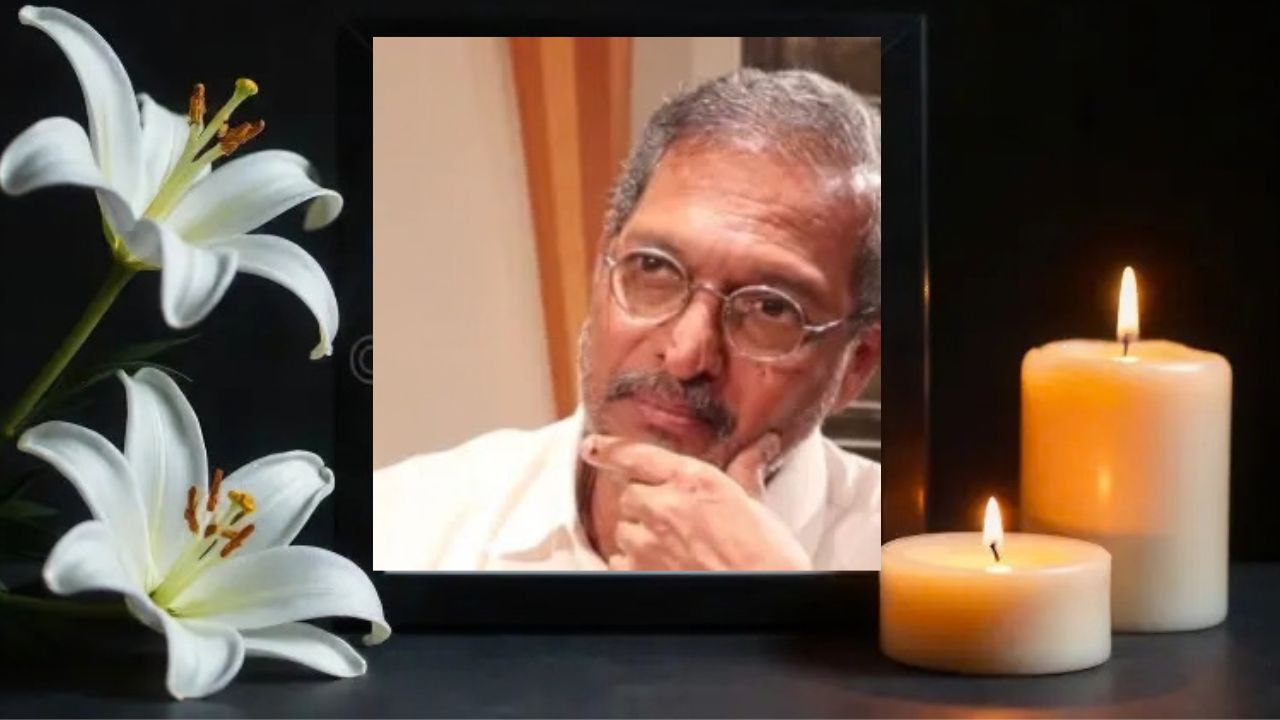
Indian cinema lost one of its most distinctive and influential actors on October 8, 2026, with the passing of Nana Patekar at the age of 75.
Patekar reportedly suffered a sudden health emergency at his residence in Dona Paula, Goa. He was found unconscious and doctors reportedly attempted resuscitation for around 45 minutes, but could not revive him. A cardiac arrest has been cited as the preliminary cause of death, while a post-mortem examination was also conducted for further medical clarity.
His death is more than the loss of a popular actor. It marks the departure of a performer whose craft was built on intensity, restraint and emotional truth. Patekar had a rare ability to make silence speak, turn anger into vulnerability and bring extraordinary emotional depth to seemingly ordinary characters.
Born Vishwanath Patekar on January 1, 1951, in Murud, Maharashtra, he grew up amid financial hardships. Reports say that during his teenage years, he painted film posters to help support his family. He later studied at the Sir J.J. School of Art in Mumbai before moving towards theatre.
The struggles of his early life became an important part of his artistic identity. His performances often carried the restlessness of a man confronting injustice, inequality and the pressures of everyday life.
Patekar made his Hindi film debut with ‘Gaman’ in 1978. His recognition grew gradually, with films such as Salaam Bombay! and Vidhu Vinod Chopra’s ‘Parinda’ establishing him as a formidable serious actor. His performance in Parinda earned him the National Film Award for Best Supporting Actor.
He later delivered some of the most memorable performances in Indian cinema. In ‘Krantiveer’, his portrayal of an angry yet socially conscious character became part of popular cinematic memory and earned him the National Film Award for Best Actor. He also received a National Film Award for ‘Agni Sakshi’, taking his total to three National Film Awards.
His celebrated filmography included ‘Parinda’, ‘Krantiveer’, ‘Prahaar’, ‘Tirangaa’, ‘Agni Sakshi’, ‘Khamoshi: The Musical’, ‘Ab Tak Chhappan’, ‘Apaharan’, ‘Taxi No. 9211’ and ‘Welcome’, among others.
Yet Patekar refused to remain confined to intense or hard-edged roles. His turn as Uday Shetty in ‘Welcome’ showed his remarkable comic timing and introduced his distinctive performance style to a younger generation of audiences.
In Marathi cinema, ‘Natsamrat’ represented another high point of his career. His portrayal of a fading theatre veteran confronting memory, loneliness and the collapse of his personal world demonstrated the emotional maturity of an actor whose craft had only deepened with age.
Beyond Acting
Patekar also stepped behind the camera. In 1991, he directed ‘Prahaar: The Final Attack’, a film centred on military life, discipline and the experiences of soldiers.
His association with the armed forces extended beyond cinema. He underwent military training and, according to the source material, spent time with soldiers during the Kargil conflict.
His public life was also closely associated with social concerns. The crisis of drought and farmer suicides in Maharashtra affected him deeply. Along with actor Makarand Anaspure, he founded the NAAM Foundation, which worked to support farmers’ families and rural communities.
That commitment became an important part of his legacy. Away from the glamour of the film industry, Patekar was known for his straightforward manner and willingness to speak openly on social issues.
An Actor Who Made Silence Speak
Nana Patekar’s acting cannot be reduced to his famous dialogues. His pauses, facial expressions, shifting voice and intense gaze often carried as much weight as his words.
From the unforgettable Anna of ‘Parinda’ and Pratap of ‘Krantiveer’ to Sadhu Agashe in ‘Ab Tak Chhappan’, Uday Shetty in ‘Welcome’ and Ganpatrao Belwalkar in ‘Natsamrat’, his characters occupied very different worlds, yet each bore the unmistakable imprint of the actor.
His journey began with hardship, reached the highest levels of Indian cinema and eventually extended into social service. That combination made him more than a successful screen performer.
Nana Patekar leaves behind a legacy in which art and social consciousness remained closely intertwined. His films will continue to introduce new generations to an actor who did not merely perform characters, but made audiences feel their anger, pain, vulnerability and humanity.
Indian cinema has lost a remarkable artist. His voice may have fallen silent, but the characters he created will continue to speak.
Om Shanti.
