
New Birth, Death Registration Rules from October 1
Delayed registration beyond two years will require a First-Class Judicial Magistrate’s order under the amended law

GG News Bureau
New Delhi, 18th Sept: The amended provisions governing the registration of births and deaths will come into force from October 1, 2026, bringing stricter procedures for delayed registration of such events.
Registrar General of India Mrityunjay Kumar Narayan announced the implementation through a Gazette notification issued on Wednesday, stating that the Central Government has fixed October 1 as the date for commencement of the provisions of the Registration of Births and Deaths (Amendment) Act, 2026.
Under the new provisions, registration of a birth or death more than two years after the date of occurrence will require an order from a First-Class Judicial Magistrate. Such cases will therefore undergo a judicial-level verification and approval process before registration.
For applications submitted after one year but within two years of the birth or death, approval from the designated authority will be required. The District Magistrate, Sub-Divisional Magistrate or an authorised Executive Magistrate may issue the necessary order after verifying the correctness of the information submitted.
Registration will be completed after the prescribed fee is deposited and the required approval is obtained.
The amended framework introduces different levels of scrutiny for delayed registrations, with the process becoming more stringent as the delay increases. The changes are aimed at encouraging timely reporting of births and deaths and maintaining updated and reliable official records.
The Registration of Births and Deaths (Amendment) Bill, 2026 was passed by both Houses of Parliament and became law after receiving the President’s assent. It amends the Registration of Births and Deaths Act, 1969, which provides the legal framework for compulsory registration of births and deaths across the country.
The 1969 Act was also amended in 2023, with those provisions coming into effect from October 1, 2023.
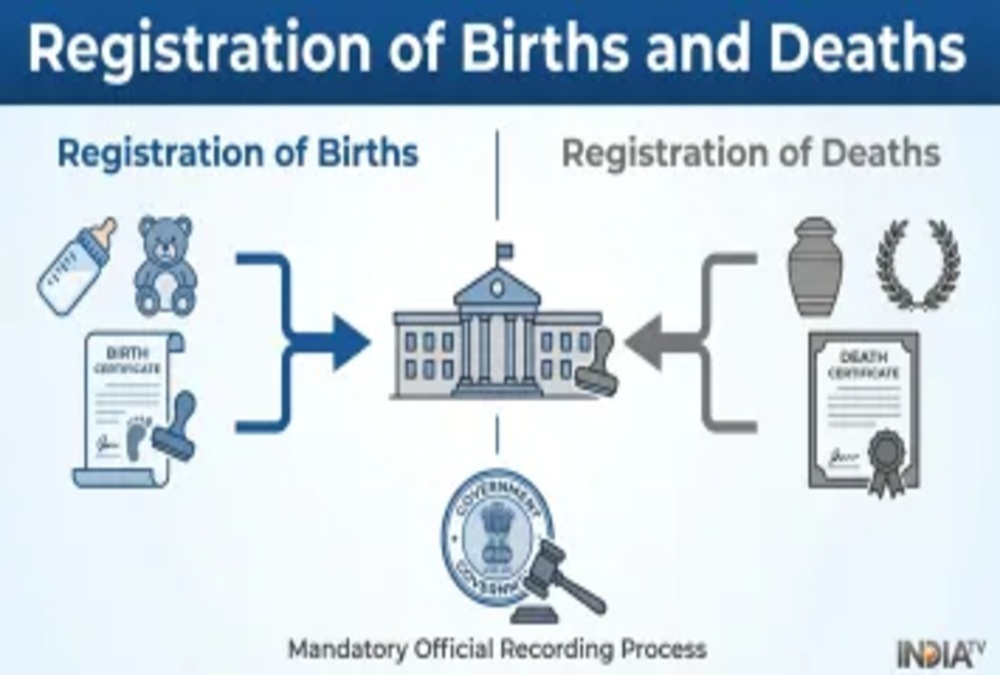
Birth and death registration records have significance for a range of administrative and legal purposes. A birth certificate serves as an important document establishing a person’s date of birth and identity, while a death certificate provides official confirmation of death.
The government has maintained that strengthening the delayed-registration mechanism will encourage timely reporting and help improve the accuracy and reliability of official birth and death records.
