
UN Rights Chief Warns AI Regulation Clock Is Ticking
Volker Türk urges urgent safeguards, human oversight and stronger accountability as AI development accelerates worldwide

By Anjali Sharma
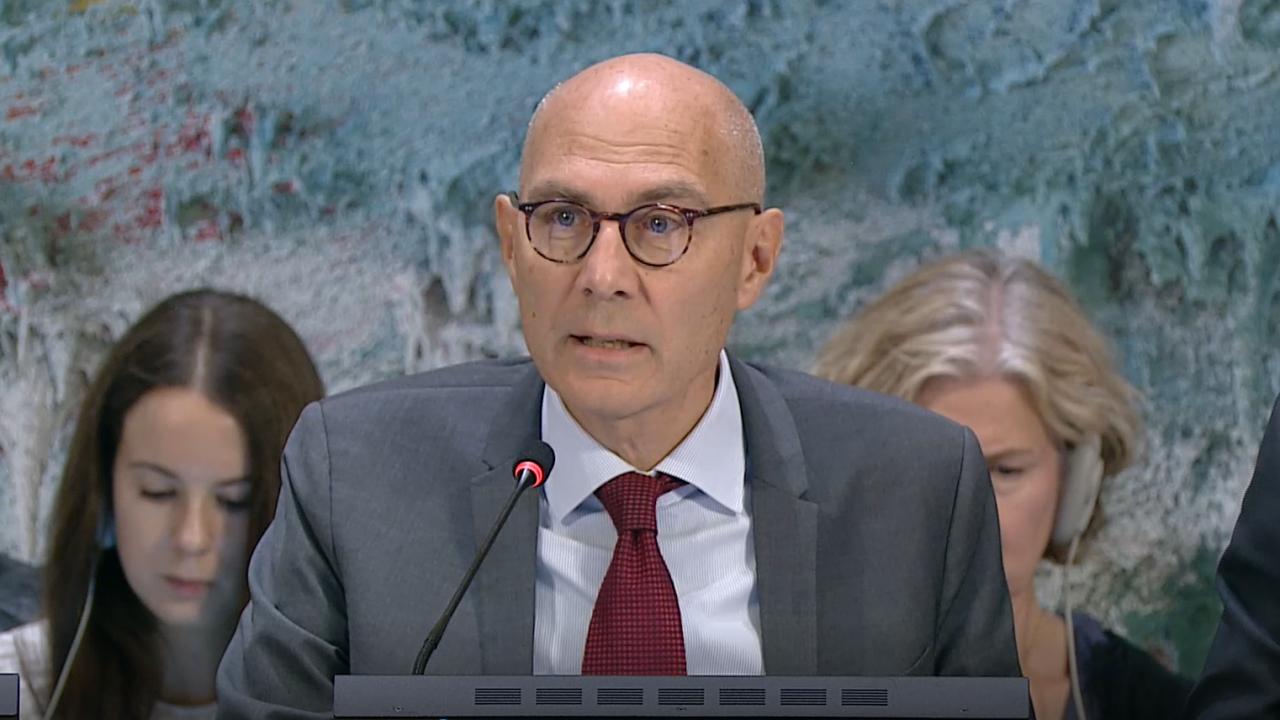
UNITED NATIONS – UN High Commissioner for Human Rights Volker Türk on Monday warned that the world is running out of time to put safe guardrails on artificial intelligence as a “ruthless race” between companies and countries raises concerns about human safety and even humanity’s survival.
Turk was speaking in the UK at an AI and Human Rights Summit in Oxford he said the technology could deliver dazzling advances in science, health, education and even human rights work.
He noted that its tools are being built and controlled by a select few, without public oversight, and are already doing things their creators cannot fully predict or manage.
UN rights chief warned that AI could undermine equality, freedom, privacy and public debate in subtle ways, “letting dystopia creep in unnoticed”. Entire populations could be cut off from communication, clean water, heating and financial services “at the click of a button”.
He called for urgent action to prohibit machines from deciding who lives and who dies, noting that AI is already changing the face of warfare.
Turk also cited studies showing students who rely on AI retain less and think less independently, and asked whether the world is heading for a future in which no one can understand, question or even guide the technology.
Mr. Türk called for mandatory human rights safeguards and due diligence in how AI is developed and used, adapted as the technology evolves. Countries that host AI companies, or have influence over their supply chains, must require them to act responsibly and hold them to account when they do not, he said.
He added that not every answer lies in existing law and some areas will need new legal approache. But updating rules on liability, cybersecurity and data protection could offer protection in the meantime.
Turk urged stronger collaboration on security and independent monitoring within the industry “not in words, but in practice” – and a bigger say for civil society and people whose rights are affected.
“We can no longer afford to wait or rely on goodwill,” he said.
Mr. Türk welcomed the creation of the Global Dialogue on AI Governance and the Independent International Scientific Panel on AI both UN initiatives along with a joint call for tighter control of frontier AI models backed by 29 States and the European Union.
He also said AI industry leaders had taken new steps last week on safeguards, self-regulation and risk assessment apparently a reference to a voluntary accord signed at the White House on 29 September by President Donald Trump and the heads of six AI companies.
He reiterated that it carries no penalties for firms that ignore it, with President Trump describing it as “morally binding”.
“Too few are walking the talk”, he said who wrote to States and frontier AI companies three weeks ago urged them to act now to reduce risks.
“If we fail to move quickly, we risk unforeseeable consequences – for ourselves and future generations,” he concluded.
