
Uttarakhand Disaster Model Gets Global Praise at BRICS Meet
State Showcases Silkyara Tunnel Rescue and Disaster Response Strategies Before 11-Nation Gathering

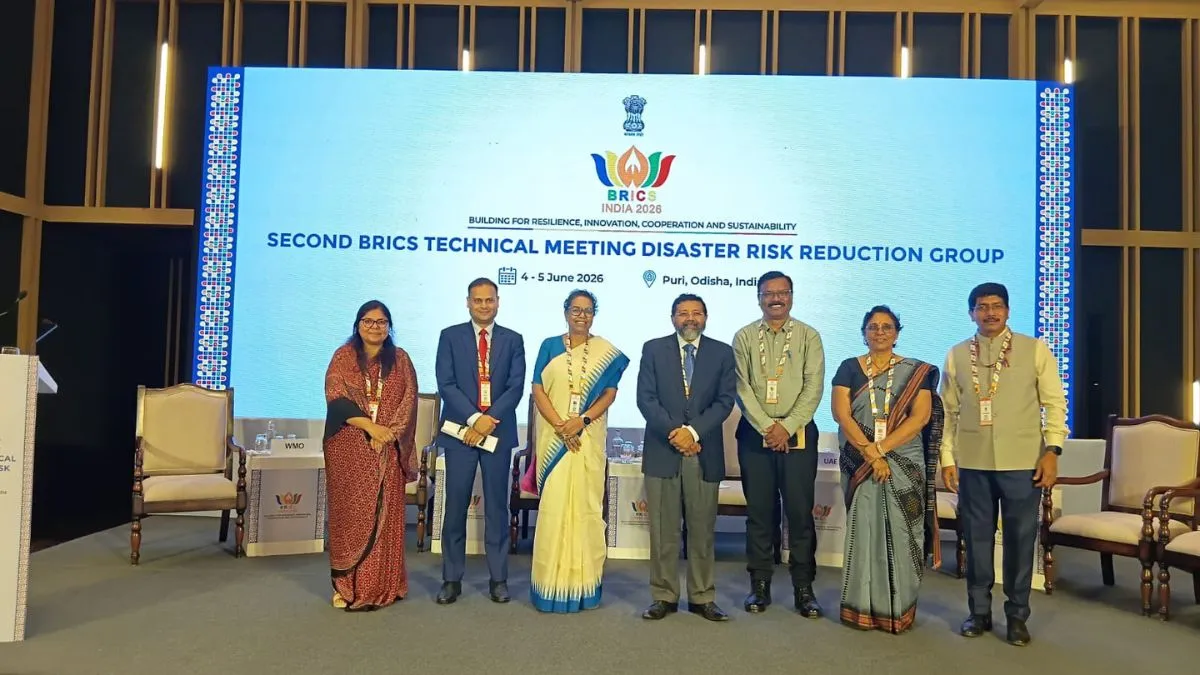
- Uttarakhand’s disaster management model praised at BRICS DRR meeting
- Officials showcased Silkyara Tunnel rescue and Dharali disaster response
- Delegates from 11 BRICS nations discussed resilience and preparedness
- State’s use of technology and rapid response mechanisms draws appreciation
GG News Bureau
Dehradun, 8th June: Uttarakhand’s disaster management model received international recognition during the second technical meeting of the BRICS Disaster Risk Reduction (DRR) Working Group held in Puri, Odisha, from June 3 to 5 under India’s presidency.
The three-day meeting brought together senior officials, experts and policymakers from 11 BRICS member and partner countries, including Brazil, Russia, India, China, South Africa, Egypt, Ethiopia, Iran, Saudi Arabia, the United Arab Emirates and Indonesia.
The discussions focused on disaster preparedness, resilient infrastructure, early warning systems, rapid response mechanisms and sustainable disaster management strategies.
Representing Uttarakhand, SDRF Commandant Arpan Yaduvanshi and Uttarakhand Landslide Mitigation and Management Centre (ULMMC) Director Shantanu Sarkar presented the state’s disaster management framework, highlighting preparedness measures, technological interventions, rescue capabilities and emergency response systems.
The officials showcased two major disaster response operations — the Silkyara Tunnel rescue mission and the Dharali disaster response operation.
The Silkyara Tunnel rescue, which drew global attention in 2023, involved the successful rescue of 41 workers trapped inside a collapsed tunnel for more than two weeks. The Dharali operation highlighted the state’s response capabilities in a remote mountainous region affected by disaster.
Delegates from participating countries reportedly praised both operations and appreciated Uttarakhand’s approach to handling complex rescue missions in challenging terrain.
During the presentation, state officials also outlined the unique disaster-related challenges faced by Uttarakhand, including landslides, cloudbursts, heavy rainfall, glacial lake outburst floods, road blockages and risks associated with pilgrimage routes.
Yaduvanshi said the state has been consistently strengthening disaster preparedness and risk reduction measures under the leadership of Chief Minister Pushkar Singh Dhami.
“Through scientific planning, efficient administration and timely decision-making, efforts are being made to minimise the impact of disasters,” he said.
The delegates were also briefed on various disaster management initiatives being undertaken under the guidance of Disaster Management Secretary Vinod Kumar Suman.
Sarkar highlighted the increasing use of geospatial technology, remote sensing, data analytics and early warning systems in disaster risk assessment and response planning.
He said these tools are helping authorities identify risks more accurately and respond more effectively during emergencies.
Officials noted that the BRICS platform provided an opportunity for participating nations to exchange experiences, share best practices and strengthen disaster response capabilities through international cooperation.
The appreciation received by Uttarakhand at the BRICS meeting is being viewed as a major achievement for the state and a recognition of the efforts made by the Uttarakhand State Disaster Management Authority, SDRF and other agencies involved in disaster preparedness and response.
