

Poonam Sharma
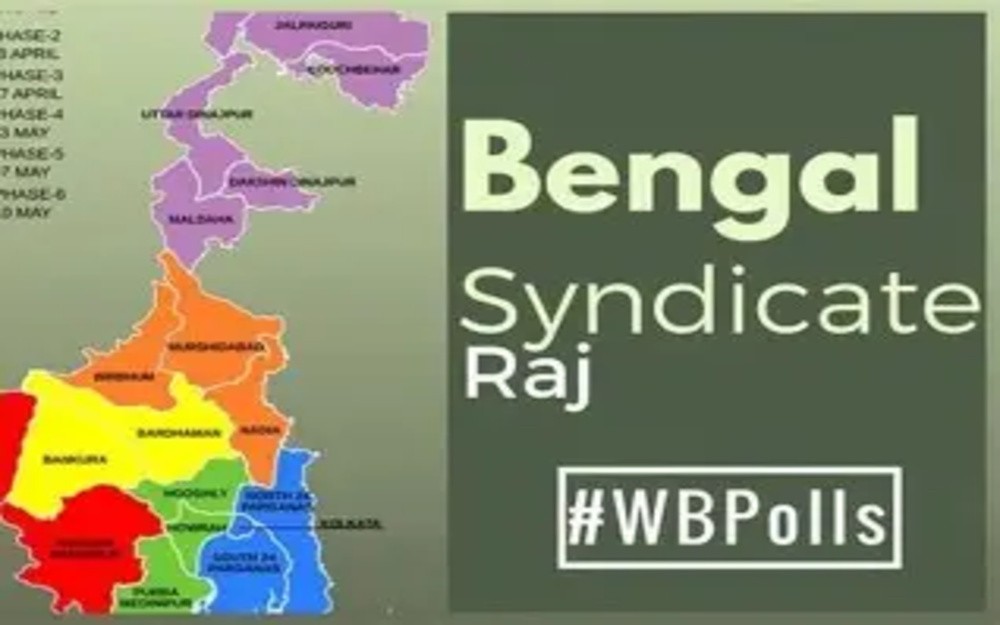
People in West Bengal really thought things would change when they turned to Mamata Banerjee after years of being ruled by the Left. Voters were sick of the corruption and inefficiency of the old government, so they saw Mamata as a leader who could bring new life and fairness to the state. But as time has gone on, life for the average Bengali has only gotten harder. Syndicate rule, in which local groups control everything from farming to building, has spread to every part of society, making many people feel trapped and hopeless.
The Kitchen Table Tells the Story
You can see the fight right at home. Government surveys show that families in rural West Bengal spend more than half of their income just to put food on the table. This number has stayed the same at 51.5%, while the national average keeps going down. Families in other parts of India are slowly able to save more money and invest in their children’s future, but families in Bengal are still stuck in the same old routine. Families have to make hard choices every day about what to buy and what to give up because prices are going up and wages aren’t.
The Gap in Money Grows
It’s not that incomes in Bengal haven’t gone up; they have. But the gap between the state and the rest of India keeps getting bigger. The Prime Minister’s Economic Advisory Council and CMIE have done studies that show that other states have clearly made progress in income and savings since 2011, but West Bengal hasn’t. For most people, this means that their dreams of a better life—like owning a home, sending their kids to school, or starting a small business—are getting farther away.
Health: A Fight Every Day
In Bengal, things get even more personal when you walk into a rural clinic or a neighborhood pharmacy. The National Family Health Survey shows that about 71% of children and 76% of women in the state are anemic. It’s not just a number; it’s about mothers who are too tired to work, kids who can’t pay attention in school, and families who have to borrow money to buy basic medicines.
Another problem is getting to healthcare. Bengal’s out-of-pocket costs are still very high, but they have gone down a little in the last ten years. Bengal’s own program, Swasthya Sathi, hasn’t helped as much as the rest of India, where costs have dropped sharply (in part because of national insurance plans). A lot of private hospitals won’t take it, and the price of medicines keeps going up, especially because syndicate-run pharmacies charge more.
Going after chances far from home
One of the saddest things about Bengal’s problems is that so many people are leaving the state. In the last ten years, the number of people leaving West Bengal for work has grown from about half a million to almost two and a half million. A lot of them are young people who are educated and don’t see a future at home.
In Kerala, a daily wage worker can make almost three times as much as in Bengal. That extra money, which can be as much as ₹15,000 a month, can help you decide whether or not to send your child to college. Because of this, whole villages are left with only old people and very young people, while the workers build someone else’s future hundreds of miles away.
Farmers Have No Choice but to Work for Syndicates
Bengal’s farmers are always fighting against debt and the hold of strong middlemen. Only about 40% of farmers can get credit at a reasonable rate, so many have to borrow from moneylenders who charge very high interest rates. Syndicate groups often control who can get subsidies, seeds, and the sale of crops, even when the government has programs in place.
It’s especially bad for sharecroppers. A lot of people can’t sell their crops directly at government mandis because they don’t have the right paperwork or coupons, which are often controlled by the syndicates. Instead, they have to sell to middlemen for prices that are much lower than the official minimum, which means they lose out on important income because syndicate members keep the difference.
The Hidden Cost: Farmers Who Kill Themselves
According to official records, there are no farmer suicides in Bengal. But activists and RTI disclosures show that many deaths are just called “daily laborer” suicides, which hides how bad things really are in rural areas. In places like Paschim Medinipur, families quietly mourn, while the real reasons—huge debt, crop failure, and syndicate exploitation—are ignored.
The Cost of Broken Promises: The End
Most regular people don’t think that Bengal will do well under new leadership. Syndicate rule has become a part of everyday life, making everything harder and more expensive, from getting medical care to buying rice. The political slogans may talk about “Manush” (the common person), but the truth is that things are getting worse, progress is stalled, and hope is lost. In West Bengal, it’s not just numbers; it’s how people live every day.
