
Supreme Court Tightens Crackdown on Digital Arrest Scams
RBI told to issue banking SOP in four weeks; Centre asked to examine victim compensation framework

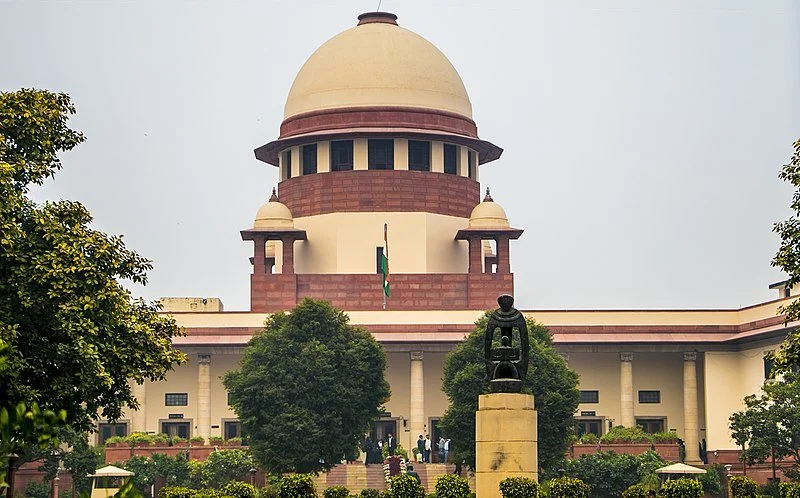
- Supreme Court issues comprehensive directions to tackle digital arrest scams.
- RBI directed to notify SOP for banks within four weeks.
- Centre asked to examine shared liability and victim compensation framework.
- States ordered to operationalise Cyber Crime Coordination Centres and e-Zero FIR system.
GG News Bureau
New Delhi, 4th Aug: The Supreme Court on Tuesday issued a series of directions to strengthen India’s response to the growing menace of digital arrest and cyber-enabled financial frauds, directing the Reserve Bank of India (RBI) to frame a Standard Operating Procedure (SOP) for banks within four weeks and asking the Centre to examine a compensation framework for victims.
A Bench comprising Chief Justice of India Surya Kant and Justices Joymalya Bagchi and V. Mohana passed the directions while hearing a suo motu matter concerning cyber frauds and digital arrest scams.
Observing that the existing mechanisms require wider adoption, faster implementation and continuous follow-up, the court directed the RBI to formally adopt and circulate SOPs outlining the procedure banks must follow for imposing temporary debit holds on accounts linked to cyber fraud.
The SOP will also include a grievance redressal mechanism, a system for restoration of defrauded funds to victims and public awareness measures explaining these mechanisms.
The apex court directed the Registrars General of all High Courts to inform courts and adjudicating authorities dealing with frozen bank accounts about the grievance redressal mechanism and encourage affected account holders to first avail themselves of the prescribed process.
The court further ordered all States and Union Territories to notify and operationalise State Cyber Crime Coordination Centres within four weeks and implement the e-Zero FIR mechanism in consultation with the Indian Cyber Crime Coordination Centre (I4C) and the Ministry of Home Affairs.
Authorities were also instructed to ensure speedy disposal of cases involving frozen bank accounts linked to cyber fraud.
The Supreme Court directed the inter-departmental committee to launch extensive public awareness campaigns on preventing cyber fraud and digital arrest scams, while coordinating with banks to improve fraud prevention, facilitate recovery of stolen money and assist investigations.
Recognising the need for stronger victim protection, the Bench asked the committee to examine the feasibility of introducing a shared liability model and a victim compensation framework for digital arrest scams.
Legal Services Committees across the country have also been directed to conduct awareness programmes on cyber security, cyber crime prevention and available mechanisms for recovering defrauded funds.
The court noted that the inter-departmental committee has requested the Central Bureau of Investigation (CBI) to consider lowering the monetary threshold for taking over cyber fraud investigations and examine whether multiple cases linked to the same organised network could be aggregated to meet the threshold.
Separately, the Ministry of Electronics and Information Technology (MeitY), the Department of Telecommunications (DoT) and the I4C have been directed to study the feasibility of introducing time-based restrictions on telecom services for audio and video calls as a safeguard against digital arrest scams. The agencies have been asked to submit a note before the Supreme Court outlining the proposal’s feasibility, usefulness and possible alternatives.
