
India Rejects Japanese Lawmaker’s Bullet Train Remarks
MEA says criticism is contrary to facts, affirms Mumbai-Ahmedabad high-speed rail project is progressing as planned

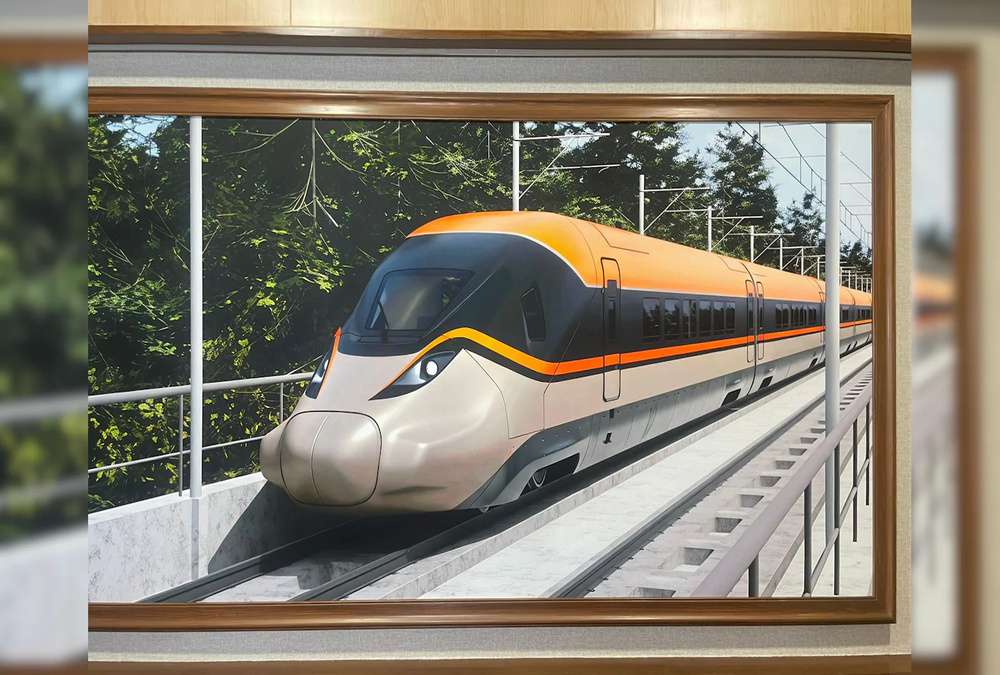
- India dismisses Japanese lawmaker’s criticism of bullet train project.
- MEA says bilateral discussions are progressing smoothly.
- First section of Mumbai-Ahmedabad corridor to open in 2027.
- Japan to supply next-generation E10 Shinkansen trains in early 2030s.
GG News Bureau
New Delhi, 18th July: India has rejected criticism by former Japanese minister and Liberal Democratic Party leader Hideki Makihara over delays in the Mumbai-Ahmedabad bullet train project, saying his remarks were an individual opinion that did not reflect the facts.
Responding to the comments, Ministry of External Affairs (MEA) spokesperson Randhir Jaiswal said India and Japan continue to make steady progress on the high-speed rail project.
“It is an individual opinion and at considerable variance with facts. India-Japan discussions on the Mumbai-Ahmedabad high-speed train project are progressing well,” Jaiswal said.
He added that Japan will supply its next-generation E10 series Shinkansen trains in the early 2030s, while the project’s first operational section is expected to open in 2027 using indigenously built Indian high-speed trains.
“The train in question is still under development. Meanwhile, construction work has rapidly progressed. Therefore, both sides agreed to start operations with Indian high-speed trains,” the spokesperson said.
Responding to Makihara’s claim that Japan had been excluded from the signalling system, Jaiswal said the signalling equipment had already been ordered in accordance with international specifications and that no Japanese offer had been received in that regard.
“The project execution is in line with the common goal of starting the high-speed train project at the earliest,” he added.
Makihara had criticised India’s handling of the project in a social media post, alleging repeated delays, failure to honour commitments and exclusion of Japan from the signalling system, which he described as critical for safety.
The Mumbai-Ahmedabad High-Speed Rail project is being implemented with significant financial and technical support from Japan and is considered a flagship initiative in India-Japan strategic cooperation. Initially, India will operate indigenous high-speed trains before transitioning to Japan’s E10 Shinkansen trains after their induction in the early 2030s.
