
India’s Bioeconomy Reaches $190 Billion in 12 Years: Jitendra Singh
Union Minister highlights major gains in biotechnology, space, weather forecasting and innovation under PM Modi's leadership

- India’s bioeconomy grows from $10 billion to over $190 billion
- Space economy projected to reach $45 billion in the next decade
- Space startups surge from single digits to over 400
- Weather radar network expands from 17 to nearly 50, with 50 more planned
GG News Bureau
New Delhi, 15th June: India’s science, technology and innovation ecosystem has witnessed transformative growth over the last 12 years, with the country’s bioeconomy expanding from nearly $10 billion in 2014 to over $190 billion today, Union Minister Dr Jitendra Singh said on Sunday.
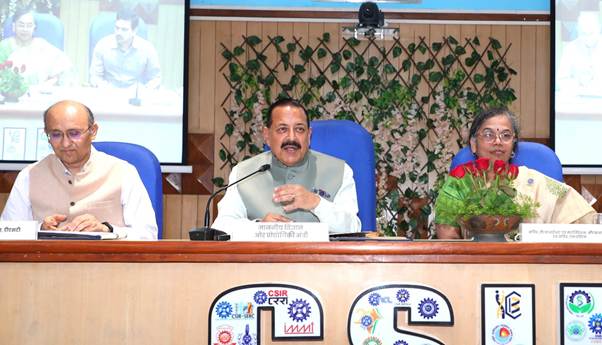
Addressing a press conference on “12 Years of Transformative Growth in Science, Technology and Innovation” at the CSIR Headquarters in New Delhi, the Minister said India’s scientific progress has moved beyond laboratories to become a key driver of economic growth, governance and public welfare under the leadership of Prime Minister Narendra Modi.
Bioeconomy Nears $200 Billion Mark
Dr Jitendra Singh said India’s biotechnology sector has emerged as a global force, driven by indigenous innovations in healthcare, genomics, diagnostics and biopharmaceuticals.
“The bioeconomy has grown from nearly $10 billion in 2014 to more than $190 billion today and is expected to touch $300 billion by 2030,” he said.
The Minister credited policy initiatives such as the BioE3 framework for strengthening India’s position as a global biotechnology hub.
He also highlighted breakthroughs in advanced healthcare technologies, including affordable CAR-T cell therapy, next-generation antibiotics, precision medicine and genomics research.
Space Sector Witnesses Historic Expansion
Highlighting achievements in the space sector, Dr Singh said India’s space economy, currently valued at around $8-9 billion, is projected to reach nearly $45 billion over the next decade.
He noted that the number of space startups has increased from single digits a few years ago to more than 400 today following major policy reforms and the opening of the sector to private participation.
Referring to the success of Chandrayaan-3, he said India established itself among the world’s leading space-faring nations by becoming the first country to achieve a successful landing near the Moon’s south pole.
The Minister also reiterated India’s long-term goals, including the establishment of the Bharatiya Antariksh Station by 2035 and an Indian Moon landing by 2040.
Weather Forecasting Sees Major Upgrade
Dr Singh described the transformation of India’s weather forecasting infrastructure as one of the country’s biggest scientific achievements.
He said the number of weather radars has increased from just 17 in 2014 to nearly 50 today, while another 50 radars are planned under Mission Mausam.
Weather forecasting coverage has expanded from around 300 cities to nearly 1,700 locations, significantly improving disaster preparedness and public safety.
The Minister said advanced systems such as lightning detection networks and hyper-local “Nowcast” forecasting services are helping farmers, disaster management agencies and citizens make informed decisions.
Science Driving National Development
The Minister said flagship government programmes across healthcare, agriculture, infrastructure and governance are increasingly powered by indigenous scientific innovations.
He highlighted the success of CSIR’s Aroma Mission, which has created livelihood opportunities for farmers, particularly in Himalayan regions, and cited steel slag road technology as an example of how scientific innovation is contributing directly to sustainable infrastructure development.
Dr Singh also pointed to reforms in the nuclear energy sector, saying the opening of the sector to private participation is expected to accelerate investment, innovation and capacity building.
Towards Viksit Bharat 2047
The Minister said India’s scientific achievements, including the development of indigenous Covid-19 vaccines and the success of Chandrayaan-3, have enhanced the country’s global standing and demonstrated the strength of its innovation ecosystem.
He stressed that science, technology and innovation have become central pillars of India’s growth strategy and will play a crucial role in achieving the vision of Viksit Bharat 2047.
“The achievements of the last twelve years show how science and technology are improving the lives of citizens, creating jobs, strengthening strategic capabilities and driving India towards becoming a global knowledge economy,” he said.
