
SC Refers Umar Khalid Bail Verdict to Larger Bench
Top court seeks clarity on UAPA bail law and Article 21 protections in delayed trials

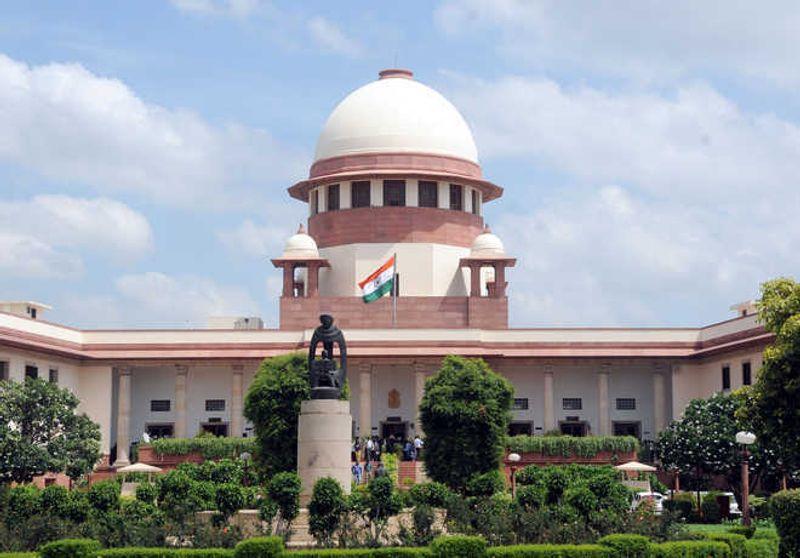
- Supreme Court refers Umar Khalid bail judgment to larger bench
- Court cites differing interpretations of KA Najeeb ruling
- Bench stresses balance between Article 21 and UAPA restrictions
- Delhi riots accused Tasleem Ahmed and Khalid Saifi granted bail
GG News Bureau
New Delhi, 22nd May: The Supreme Court of India on Friday referred the judgment denying bail to Umar Khalid and Sharjeel Imam in the 2020 Delhi riots conspiracy case to a larger bench for reconsideration.
The court said the interpretation of bail provisions under the Unlawful Activities (Prevention) Act requires clarity due to differing judicial views on the applicability of the Supreme Court’s earlier ruling in the KA Najeeb case.
A bench of Justices Aravind Kumar and Prasanna B Varale observed that a coordinate bench of equal strength could not effectively unsettle the reasoning of an earlier judgment and said the issue should be examined by a larger bench constituted by the Chief Justice of India.
The development comes after another bench of Justices Ujjal Bhuyan and B V Nagarathna earlier expressed reservations over the January verdict denying bail to Umar Khalid and Sharjeel Imam.
The Delhi Police had subsequently urged the Supreme Court to settle the legal position regarding grant of bail under UAPA in cases involving prolonged incarceration and trial delays.
Appearing for Delhi Police, Additional Solicitor General S V Raju argued that the earlier judgment had correctly interpreted precedents including the KA Najeeb and Kartar Singh rulings.
Raju questioned whether accused persons in serious terror-related cases should receive bail solely because of delays in trial proceedings.
The Supreme Court, however, said the issue involved broader constitutional considerations and could not be viewed narrowly.
“At the outset, we deem it appropriate to record that Najeeb is an authoritative pronouncement of this court,” the bench observed.
The court emphasised that the right to a speedy trial is part of personal liberty guaranteed under Article 21 of the Constitution and described the KA Najeeb judgment as a constitutional safeguard against prolonged detention.
At the same time, the bench noted that courts must also respect Parliament’s intent behind stringent bail restrictions under Section 43D(5) of the UAPA.
The judges clarified that the KA Najeeb ruling does not automatically override the restrictions contained in the anti-terror law and said courts must carefully balance constitutional protections with legislative policy.
The bench further observed that the issue should not be left to “uncertain application” by different courts and called for an authoritative interpretation by a larger bench.
“The true question is how Article 21 is to be applied in a statutory regime where Parliament has placed restrictions on bail,” the court said.
The Supreme Court also granted bail to Delhi riots accused Tasleem Ahmed and Khalid Saifi, who have remained undertrial prisoners since 2020.
The Delhi riots conspiracy case under UAPA relates to allegations of a larger conspiracy behind the communal violence that took place in northeast Delhi in February 2020.
