
High-Value Agriculture Will Transform Indian Farming: PM Modi
PM highlights high-value farming, fisheries growth and AgriStack at post-Budget webinar

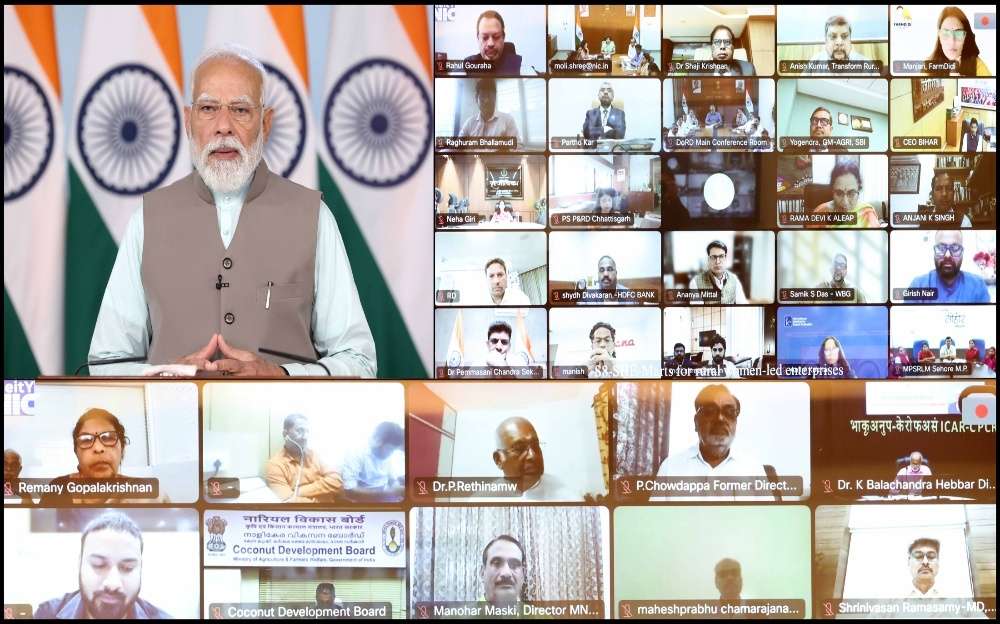
- Prime Minister Narendra Modi addresses Post-Budget Webinar on Agriculture and Rural Transformation
- Calls for scaling high-value crops to boost global competitiveness of Indian agriculture
- Highlights AgriStack and technology-driven reforms in farming
- Fisheries, dairy and rural value addition identified as key growth drivers
GG News Bureau
New Delhi, 6th March: Prime Minister Narendra Modi on Friday said scaling high-value agriculture can transform Indian farming into a globally competitive sector while addressing the third Post-Budget Webinar on Agriculture and Rural Transformation.
Highlighting the focus of the Union Budget on agriculture and rural development, the Prime Minister said the government has continuously strengthened the sector through multiple initiatives aimed at reducing risks for farmers and providing them economic security.
“Our government has continuously strengthened the agriculture sector. Major efforts have reduced the risks for farmers and provided them with basic economic security,” Modi said.
He noted that more than 10 crore farmers have received over ₹4 lakh crore under PM Kisan Samman Nidhi, while nearly ₹2 lakh crore in claims have been settled under PM Fasal Bima Yojana. Institutional credit coverage for farmers has also expanded to over 75 percent.
The Prime Minister emphasised that India must now align its agriculture sector with global demand by focusing on export-oriented production. He urged stakeholders to fully utilise India’s diverse climatic conditions to boost agricultural exports.
Modi highlighted budget proposals aimed at promoting region-specific high-value crops, including cocoa, cashew and sandalwood. The government is also encouraging agarwood cultivation in the North East and temperate nut crops in Himalayan states.
“If we scale high-value agriculture together, it will transform agriculture into a globally competitive sector,” the Prime Minister said.
He added that increasing export-oriented agricultural production would create new employment opportunities in rural areas through processing and value addition.
Speaking about fisheries, Modi said the sector has vast potential to drive export growth. India is already the world’s second-largest fish producer, but the country still has scope to expand production significantly.
“Fisheries can become a major platform for export growth and a high-value, high-impact sector of rural prosperity,” he said.
The Prime Minister also highlighted India’s leadership in dairy and livestock production, noting that the country is the largest milk producer in the world and the second-largest egg producer. He stressed the importance of improving livestock health, breeding quality and scientific farm management.
He pointed out that more than 125 crore vaccine doses have been administered to livestock under the national campaign against Foot and Mouth Disease.
Modi also underlined the importance of technology in agriculture. He highlighted the development of digital public infrastructure for agriculture through AgriStack, along with initiatives such as Kisan IDs and digital land surveys.
“Technology delivers results when systems adopt it, institutions integrate it, and entrepreneurs build innovations on it,” he said.
The Prime Minister also stressed crop diversification and referred to government missions promoting edible oils, pulses and natural farming to strengthen agricultural sustainability.
He further highlighted rural development initiatives including PM Awas Yojana, PM Gram Sadak Yojana, and the role of Self-Help Groups in strengthening the rural economy.
Referring to the government’s Lakhpati Didi initiative, Modi said the target is to create three crore more women entrepreneurs by 2029, adding that suggestions from stakeholders will help accelerate progress.
Concluding his address, the Prime Minister called for innovation in agri-fintech, storage infrastructure and supply chains, expressing confidence that discussions during the webinar would help accelerate the implementation of the Union Budget’s rural development initiatives.
