
VP Radhakrishnan Releases Constitution in Sindhi
VP bats for linguistic inclusivity, says mother tongue empowers citizens

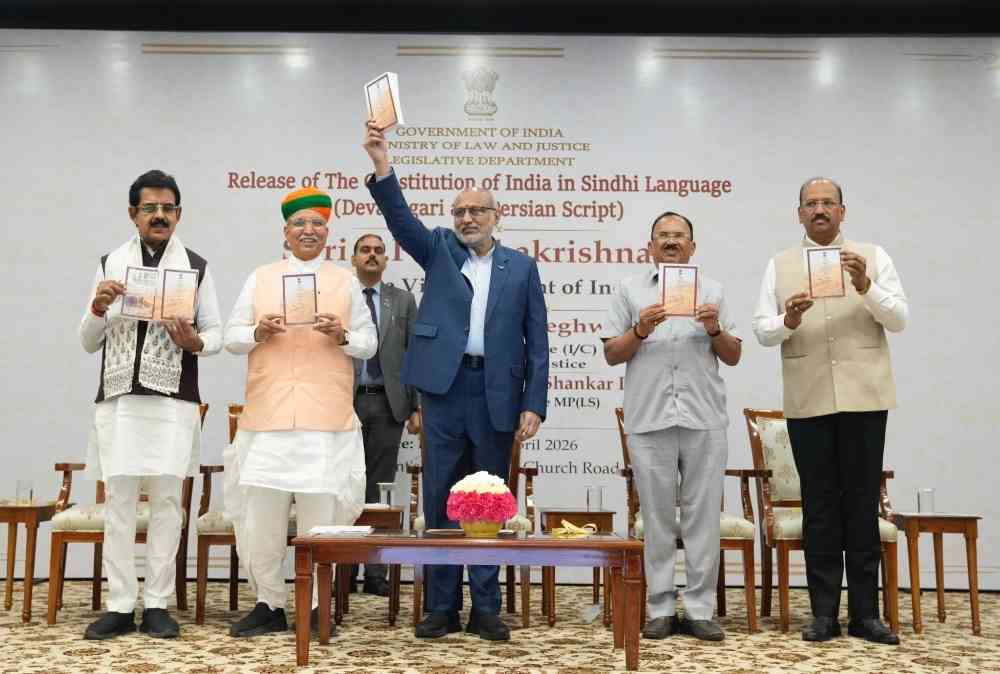
- Constitution of India released in Sindhi in Devanagari and Persian scripts
- Vice President stresses importance of language in democracy
- Calls Constitution a “living spirit” of the nation
- Govt pushing translations in multiple Indian languages
GG News Bureau
New Delhi, 10th April: Vice President C. P. Radhakrishnan on Friday released the latest version of the Constitution of India in the Sindhi language, in both Devanagari and Persian scripts, at an event held at Uprashtrapati Bhavan.
Extending greetings on the occasion of Sindhi Bhasha Diwas, the Vice President described Sindhi as one of the oldest and most melodious languages, highlighting its rich literary heritage rooted in Vedantic philosophy and Sufi traditions.
Calling the release a milestone, he noted that making the Constitution available in Sindhi—particularly in Devanagari script for the first time since Independence—strengthens linguistic inclusivity. He emphasised that the Constitution is not just a legal text but the “living spirit of the nation” that safeguards rights and guides governance.
Highlighting the government’s efforts under Prime Minister Narendra Modi, he said translating the Constitution into multiple Indian languages helps bridge the gap between citizens and governance by enabling better understanding in one’s mother tongue.
“Languages are carriers of culture, tradition and identity,” he said, adding that access to the Constitution in native languages empowers citizens and deepens democratic participation.
The Vice President also noted that India has taken steps to make the Constitution available in several languages, including Bodo, Dogri, Santhali, Tamil, Gujarati, and Nepali, reflecting the country’s linguistic diversity.
Recalling history, he mentioned that Sindhi was included in the Eighth Schedule through the 21st Constitutional Amendment in 1967, recognising its cultural significance.
He praised the Ministry of Law and Justice for its role in promoting regional language access and expressed confidence that such initiatives would contribute to building a developed India by 2047.
Union Minister of State Arjun Ram Meghwal, Rajasthan Assembly Speaker Vasudev Devnani, MP Shankar Lalwani, and other dignitaries were present at the event.
