
SC Calls Homemakers ‘Nation Builders’
Fixes ₹30,000 Monthly Notional Income; Landmark Ruling Recognises Economic Value of Unpaid Domestic Work in Compensation Cases

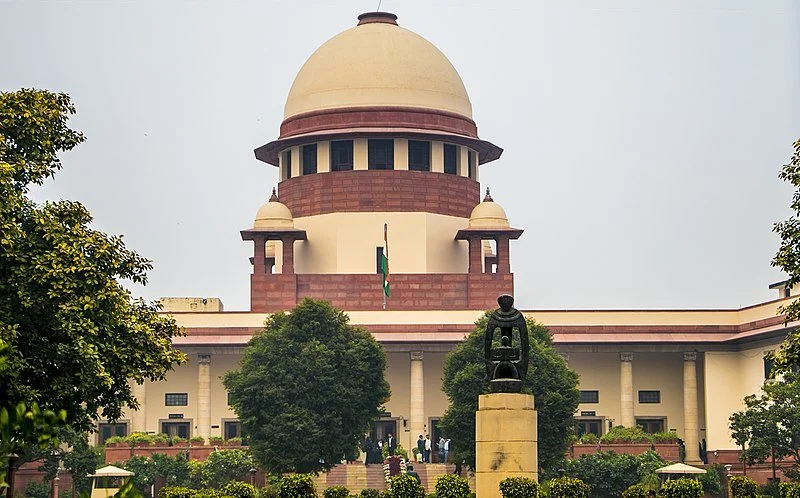
- Supreme Court recognises homemakers as “nation builders”.
- Fixes notional monthly income of ₹30,000 for compensation assessment.
- Loss of domestic-care services to be treated as a separate compensation head.
- Court highlights contribution of unpaid household work to society and economy.
GG News Bureau
New Delhi, 12th June: In a landmark judgment recognising the economic and social value of unpaid domestic work, the Supreme Court on Thursday described homemakers as “nation builders” and ruled that the loss of domestic-care services must be treated as a distinct head of compensation in accident claims.
A Bench comprising Justices Sanjay Karol and N. Kotiswar Singh fixed a notional monthly income of ₹30,000 for homemakers while assessing compensation for the loss of their services.
The ruling came while hearing an appeal filed by the family members of a woman who died in a motor accident and sought enhanced compensation.
Observing that homemakers play a foundational role in society, the Bench said their contribution extends far beyond the household and supports the functioning of the entire nation.
“Housewives contribute to the household. They are nation builders. They build the nation. How do you assess that contribution and monetise it?” the Court observed.
Expressing hope that the term homemaker would receive wider recognition, the Bench remarked that the word should now acquire the status of “nation builder”.
The Court emphasised that domestic and caregiving services provided by homemakers have immense economic value despite remaining largely unpaid and unrecognised in conventional financial assessments.
It held that the loss of domestic care must be considered an additional and independent component while determining compensation in accident and death cases.
The judgment noted that homemakers provide the invisible support structure that enables others to succeed in professional and public life.
“These are the people responsible for laying the foundation stones on which the edifices of successful businesspersons, politicians, artists, lawyers and countless workers stand,” the Court observed.
The case originated from a motor accident that occurred on November 25, 2001, when a woman travelling from Sirsa to Fatehabad lost her life.
The Motor Accident Claims Tribunal in Sirsa awarded compensation of ₹2.42 lakh in December 2003. The family challenged the award before the Punjab and Haryana High Court, seeking enhancement.
The appeal remained pending for nearly two decades after court records were damaged in a fire in 2011, leading to prolonged reconstruction proceedings.
The High Court eventually disposed of the matter in December 2024 and enhanced the compensation to ₹8.43 lakh with interest. Unsatisfied with the amount, the family approached the Supreme Court.
In its judgment delivered on June 11, 2026, the apex court devoted considerable attention to the economic significance of unpaid domestic labour.
Referring to India’s Time Use Survey and international research, the Bench noted that women spend more than seven hours daily on unpaid domestic work and perform nearly 2.6 times more unpaid caregiving duties than men.
The Court further observed that unpaid care work contributes an estimated 15 to 17 per cent of India’s Gross Domestic Product (GDP), despite remaining absent from traditional economic calculations.
Highlighting the broader social implications of the ruling, the Bench said recognising homemakers is not merely about assigning monetary value to household labour but also about challenging long-standing gender stereotypes.
“The attempt to ascribe value is not simply an exercise in assigning monetary worth, but in making the endless efforts of a homemaker more recognisable and redefining what society considers valuable,” the Court said.
The judgment is expected to have far-reaching implications for compensation claims involving homemakers and is being viewed as a significant step towards recognising unpaid domestic work within the legal framework.
