
Om Birla asks Bengal MLAs to put solutions before politics
Lok Sabha Speaker urges newly elected legislators to strengthen democratic traditions, embrace technology and uphold constitutional values

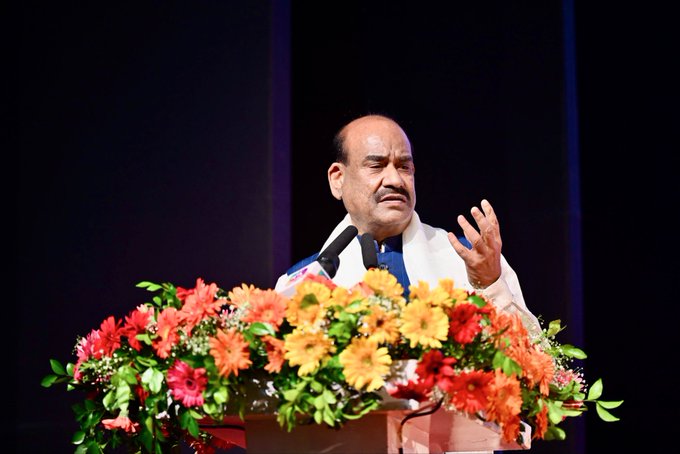
- Om Birla inaugurates two-day orientation programme for newly elected West Bengal MLAs in Kolkata.
- Says legislative debates should focus on practical solutions, not just criticism.
- Urges MLAs to rise above constituency politics and work for the entire State.
- Highlights role of AI, Digital Sansad and continuous learning in modern legislatures.
GG News Bureau
New Delhi, 3rd July: Lok Sabha Speaker Om Birla on Friday urged newly elected members of the West Bengal Legislative Assembly to strengthen democratic traditions, promote constructive legislative practices and work collectively to lead West Bengal’s renaissance, saying lawmakers must focus on solutions rather than criticism while addressing public issues.
Inaugurating a two-day orientation programme for newly elected MLAs in Kolkata, Birla said elected representatives are custodians of the people’s aspirations and must actively contribute to informed law-making, meaningful debates and effective governance while preserving the State’s democratic and cultural legacy.
Emphasising that legislative debates should produce practical outcomes, Birla said criticism remains an essential part of democracy but discussions inside the House should also offer workable solutions to people’s problems. He urged legislators to support their interventions with facts, research and reasoned arguments to improve the quality of democratic discourse.
The Lok Sabha Speaker said every MLA represents not only a constituency but also the aspirations of the entire State. He called on members to participate actively in policy-making and legislation that promotes public welfare and addresses the challenges faced by citizens across West Bengal.
Congratulating the newly elected legislators, Birla said the people have placed immense trust in them and expect accountable, responsive and visionary leadership. He added that lawmakers should become the voice of the poor and marginalised by enacting effective laws, framing people-centric policies and ensuring effective oversight of governance.
Calling continuous learning the hallmark of an effective legislator, Birla advised members to study previous debates, landmark legislations and parliamentary best practices from India and abroad. He noted that the Assembly has a significant number of first-time and young legislators, presenting an opportunity to introduce innovation and people-centric governance.
He also advised members to spend as much time as possible inside the Assembly, irrespective of whether they are scheduled to speak, saying that listening to debates and understanding different viewpoints provides invaluable legislative experience.
Highlighting the growing role of digital technology and artificial intelligence in legislative institutions, Birla said platforms such as Digital Sansad enable legislators to access parliamentary debates, policy documents and legislative best practices, helping them make informed decisions.
The Speaker said democracy thrives on dialogue, consensus and respectful dissent, adding that differences of opinion should always be expressed through dignified and reasoned debate.
Describing West Bengal as a land that has shaped India’s intellectual and cultural consciousness, Birla recalled the contributions of Raja Rammohan Roy, Swami Vivekananda, Bankim Chandra Chattopadhyay, Rabindranath Tagore, Subhas Chandra Bose and Syama Prasad Mookerjee. He expressed confidence that the State would once again emerge as a leading centre of culture, innovation and economic growth.
The orientation programme, organised by the Parliamentary Research and Training Institute for Democracies in collaboration with the West Bengal Legislative Assembly, includes technical sessions on legislative procedures, executive accountability, committee systems, parliamentary ethics, financial business and the National e-Vidhan Application (NeVA). The programme will conclude on July 4 with the valedictory address by R. N. Ravi.
