

By Anjali Sharma
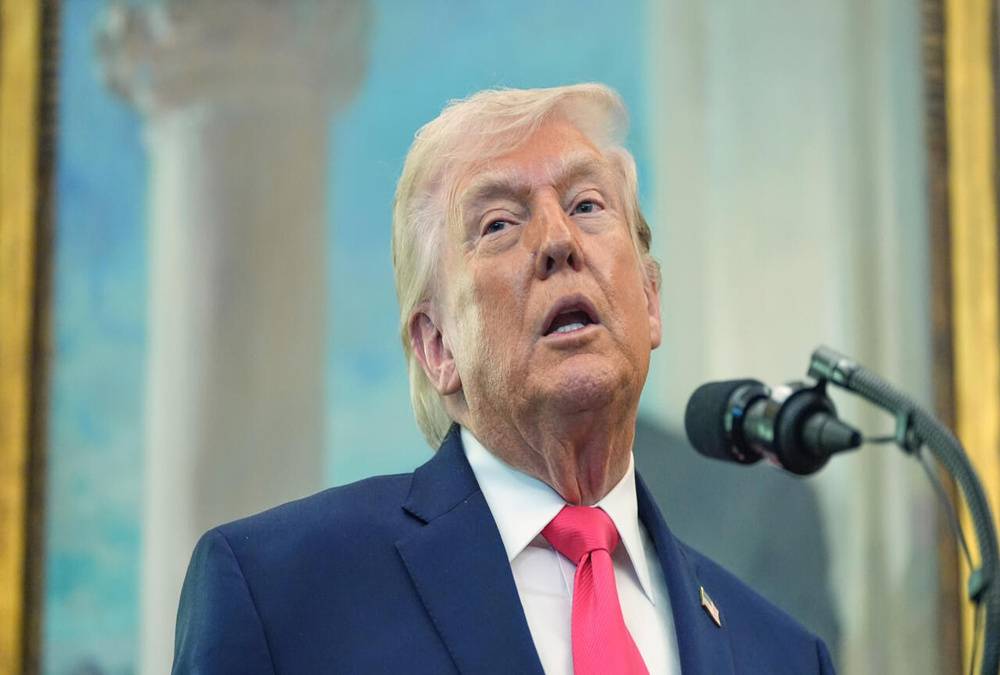
WASHINGTON – US President Donald Trump on Tuesday extended the ceasefire with Iran stated Pakistan’s leadership urged the pause and that Tehran still needs time to get its position together before talks can move forward.
Media reported that ceasefire holds but pressure builds as US keeps blockade in place, Iran signals hesitation on talks, and Hormuz disruption continues to rattle global energy markets.
The move came as Iran has rejected US conditions for talks, underlined the fragile state of diplomacy around the ongoing standoff.
The ceasefire, originally meant to create space for dialogue, now appears to be stretching into a prolonged and uncertain pause with both sides holding firm publicly.
Trump in a post on Truth Social said the decision followed outreach from Pakistan’s Army Chief Asim Munir and Prime Minister Shehbaz Sharif.
He described the Iranian leadership as divided and in need of time.
“Based on the fact that the Government of Iran is seriously fractured, not unexpectedly so and, upon the request of Field Marshal Asim Munir, and Prime Minister Shehbaz Sharif, of Pakistan, we have been asked to hold our Attack on the Country of Iran until such time as their leaders and representatives can come up with a unified proposal,” Trump wrote.
He added that US forces would continue enforcing a blockade while remaining on alert, making it clear that the ceasefire does not mean a rollback of military pressure.
“I have therefore directed our Military to continue the Blockade and, in all other respects, remain ready and able, and will therefore extend the Ceasefire until such time as their proposal is submitted, and discussions are concluded, one way or the other. President DONALD J. TRUMP,” the post read.
Iran has signaled little willingness to accept Washington’s framework for talks.
According to the Islamic Republic of Iran Broadcasting, Tehran has turned down the US conditions outright even as Trump announced the extension.
“Iran rejected the US conditions for negotiations; Trump unilaterally extended the ceasefire!,” IRIB reported, quoted official positions.
The broadcaster also cited Trump as saying the extension was linked to Pakistan’s intervention, added that the ceasefire would remain in place until Iran presents a revised proposal.
Iranian authorities have indicated they have not yet decided whether to resume negotiations with the United States, keeping the diplomatic path uncertain.
The tensions around the Strait of Hormuz have sharpened with Trump claimed that Iran is privately keen to reopen the crucial shipping route due to mounting economic losses.
“Iran doesn’t want the Strait of Hormuz closed; they want it open so they can make $500 million a day (which is, therefore, what they are losing if it is closed!),” he said, suggested that Tehran’s public stance is aimed at saving face.
He also claimed that intermediaries had recently approached him, indicating a possible shift in Iran’s position.
“People approached me four days ago, saying, ‘Sir, Iran wants to open up the Strait immediately’,” Trump said, while warning that reopening it too soon could weaken US leverage.
The Strait of Hormuz remains a key pressure point, with disruptions already impacting global energy flows and raising concerns over maritime security.
The efforts to revive negotiations appear to have hit a pause.
A planned visit by US Vice President JD Vance to Pakistan for 2nd round of talks has been deferred after Iran did not respond to American proposals.
The ceasefire brokered earlier this month, continues to hang in the balance, media reports stated.
Trump has extended the ceasefire and there has been no immediate confirmation from Iran or Israel on whether they will adhere to the truce.
The observers linked to the Iranian establishment have also questioned Washington’s intent, described the extension as a tactical move to gain advantage while maintaining military pressure through the blockade.
The talks haven’t really moved yet, and with pressure still mounting around the Strait of Hormuz, things remain on edge, with both diplomacy and global economic stakes are high as to what happens next.
