
Govt Issues Guidelines for Psoriasis, Vitiligo, Other Skin Disorders
New guidelines cover psoriasis, vitiligo, dermatitis and other skin conditions across Ayurveda, Siddha, Unani and Homoeopathy, with Yoga included.

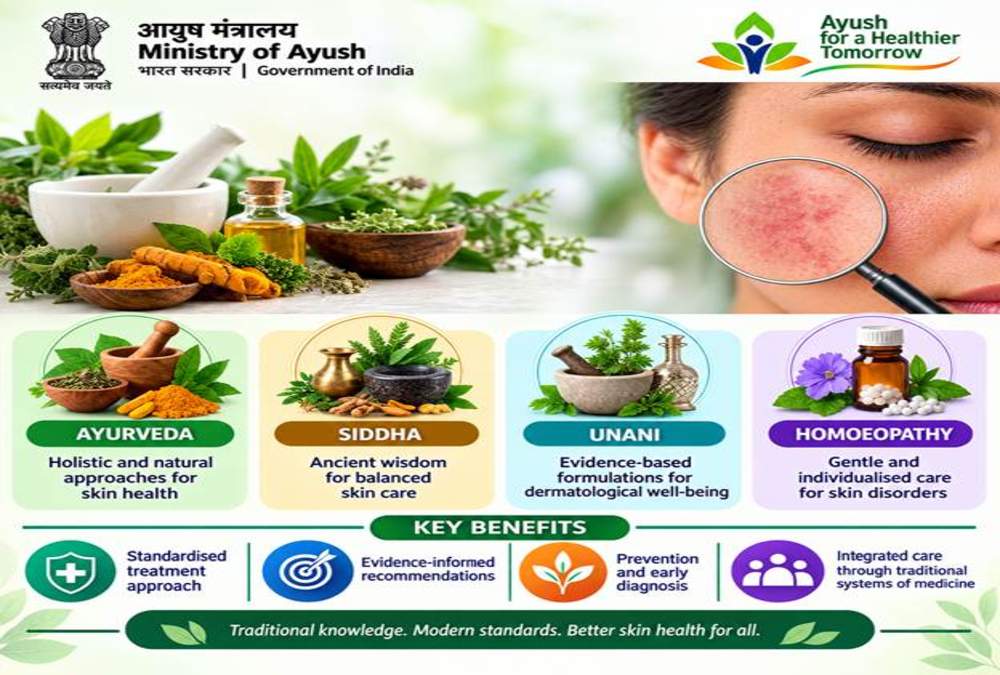
- Ayush Ministry issues standard treatment guidelines for skin disorders.
- Coverage includes psoriasis, vitiligo, dermatitis, urticaria and fungal skin infections.
- Guidelines draw on expert consultations, scientific evidence and field-level validation.
- Recommendations aim to improve clinical consistency, training and patient care.
GG News Bureau
New Delhi, 13th Oct: The Ministry of Ayush has issued Standard Treatment Guidelines for managing dermatological disorders across Ayurveda, Siddha, Unani and Homoeopathy, with Yoga also included in the initiative. The guidelines aim to improve standardisation, quality assurance and evidence-informed clinical practice across these traditional healthcare systems.
Released on the occasion of the 11th Ayurveda Day, the guidelines have been prepared by the Ayush Vertical of the Directorate General of Health Services under the Ministry of Health and Family Welfare.
The recommendations cover common skin conditions, including psoriasis, dermatitis, vitiligo, urticaria and dermatophytosis. They outline system-specific approaches to prevention, diagnosis, treatment, follow-up and rehabilitation while retaining the fundamental principles of each Ayush system.
Union Minister of State (Independent Charge) for Ayush Prataprao Jadhav said the guidelines would strengthen the integration of Ayush systems with the national healthcare framework. He highlighted their emphasis on combining traditional clinical approaches with contemporary scientific evidence to support safe, effective and holistic patient care.
Ayush Secretary Vaidya Rajesh Kotecha said the guidelines would promote greater uniformity in clinical practice and support rational decision-making. DGHS Director General Dr Loveneesh G. Krishna also emphasised multidisciplinary cooperation to improve quality assurance and patient-centred healthcare delivery.
Expert consultations and field validation
The guidelines were developed through an interdisciplinary process involving Ayush research councils, academic specialists from the four systems, Yoga experts and modern medicine specialists. The process included reviews of classical texts, assessments of contemporary scientific evidence, expert consultations and consensus-based deliberations.
The protocols were also tested in real-world healthcare settings. The Ayush Vertical worked with the Directorate of Ayush, Government of the National Capital Territory of Delhi, to assess their practical usability among medical officers in primary and secondary healthcare facilities. Feedback from these professionals was incorporated into the final documents.
The ministry expects the guidelines to support clinical decision-making, practitioner training, academic education and further research. They are also intended as reference material for practitioners, clinicians, researchers, academicians and policymakers.
The initiative marks a further step towards standardising Ayush clinical practices and strengthening their evidence-informed integration into India’s healthcare delivery system.
