
‘India Grows With the World’: PM Modi at Bloomberg Forum
Prime Minister pitches India as a reliable global partner, highlighting economic resilience, digital inclusion, green energy and reforms

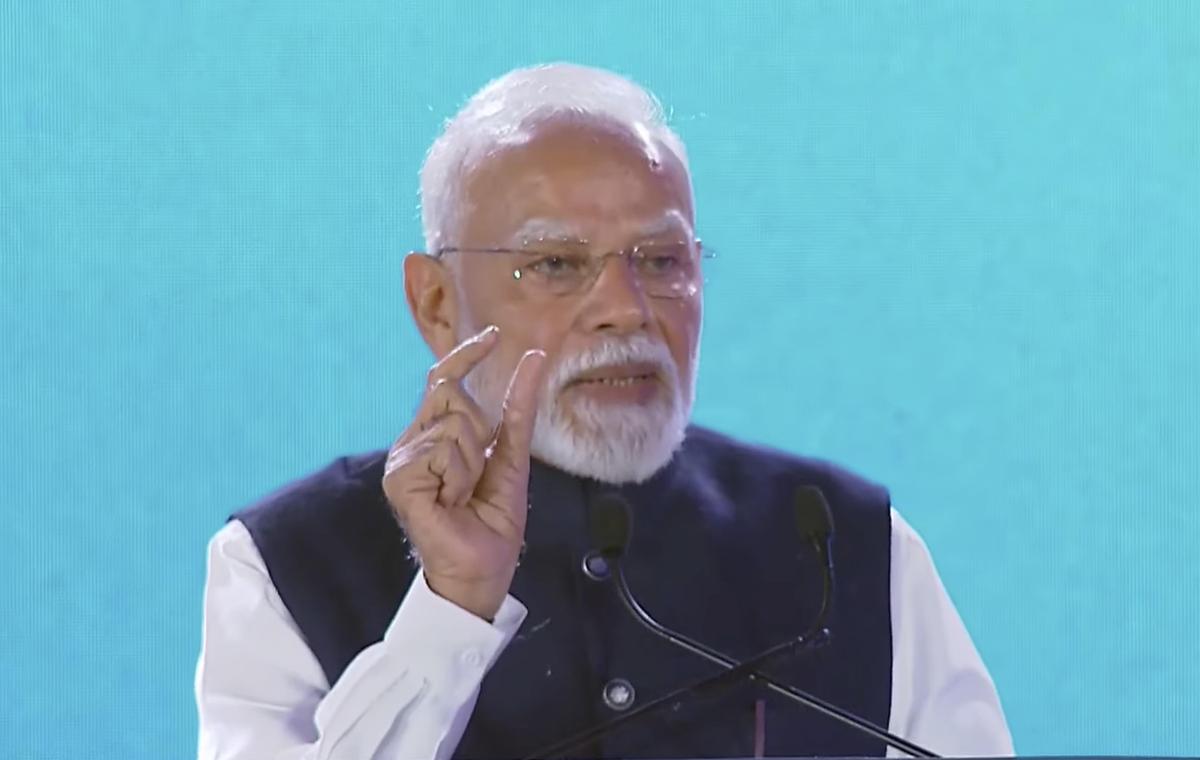
- PM Modi urges global leaders to use power to empower others.
- India’s digital inclusion, startups and direct benefit transfers highlighted.
- Renewable energy capacity rises from around 75 GW in 2014 to about 300 GW.
- Modi positions India as a reliable partner amid global economic uncertainty.
GG News Bureau
New Delhi, 13th Oct: Prime Minister Narendra Modi on Tuesday called for a global approach that uses economic, technological and national power to empower others, saying India’s progress is rooted in shared opportunities rather than competition at the expense of other countries. Addressing the Bloomberg New Economy Forum in New Delhi, he presented India as a reliable partner amid geopolitical uncertainty, supply chain disruptions and global economic challenges.
Welcoming the forum’s first edition in India, Modi congratulated Bloomberg founder Michael Bloomberg and his team for bringing together global leaders and experts to discuss the economy, technology, energy and international affairs. He said the meaning of power in the 21st century had changed, with data, knowledge, innovation and technology emerging as key drivers of influence.
“The vision I have come with is power to empower,” the Prime Minister said, calling for a shift from the power to control to the power to enable, from competing to collaborating, and from succeeding individually to helping others succeed. He argued that the true value of power lies in how it is used and whether it creates opportunities for wider sections of society.
Highlighting India’s democratic and digital transformation, Modi pointed to the country’s linguistic diversity, media landscape and growing online participation. He said affordable internet access and lower data costs since 2014 had helped expand connectivity, allowing students, small businesses and people in rural areas to access information and markets. He also cited India’s digital payments ecosystem as an example of technology serving people across economic backgrounds.
The Prime Minister highlighted India’s financial inclusion initiatives, including the JAM Trinity and Direct Benefit Transfer system, saying they had improved access to government assistance and reduced opportunities for corruption. He also cited the growth of the startup ecosystem, from a few hundred startups in 2014 to more than 2.5 lakh, noting that nearly half were based in smaller cities and more than 45 per cent had women in leadership roles.
Modi said India’s capabilities should benefit other countries as well, particularly in the Global South. He referred to the CoWIN platform used during the COVID-19 pandemic and India’s supply of vaccines to more than 100 countries as examples of domestic capacity being deployed for wider international benefit. He also pointed to India’s role in generic medicines and digital public infrastructure as evidence of its contribution to global development.
On climate action, the Prime Minister said India had achieved its target of sourcing 40 per cent of installed electricity capacity from non-fossil sources in November 2021, well ahead of the 2030 deadline. He said renewable energy capacity had risen from around 75 gigawatts in 2014 to approximately 300 gigawatts, while schemes such as PM Surya Ghar and PM-KUSUM were helping households and farmers adopt solar energy.
Addressing global uncertainty, Modi referred to the impact of pandemics, regional conflicts and disruptions affecting energy, critical minerals, trade and supply chains. He said these developments had increased the need for dependable partners who could maintain commitments and support cooperation across borders. “We do not grow at anyone’s cost; we grow with the world and for the world,” he said.
The Prime Minister also highlighted India’s economic indicators, citing 7.8 per cent growth in the April-June quarter, a current account deficit of 0.61 per cent and foreign exchange reserves exceeding $700 billion. He attributed the country’s resilience to structural reforms, including the Goods and Services Tax, insolvency legislation, the consolidation of labour laws and the decriminalisation of several minor business offences.
“For us, reforms are not a compulsion. They are a conviction,” Modi said, presenting reform as a continuing policy commitment rather than a response to external pressure. He concluded by calling for greater international cooperation to address shared challenges, including climate change, water governance and the responsible use of emerging technologies.
