Poonam Sharma
Three Powers, Rival Interests
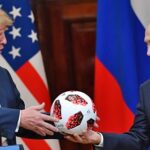
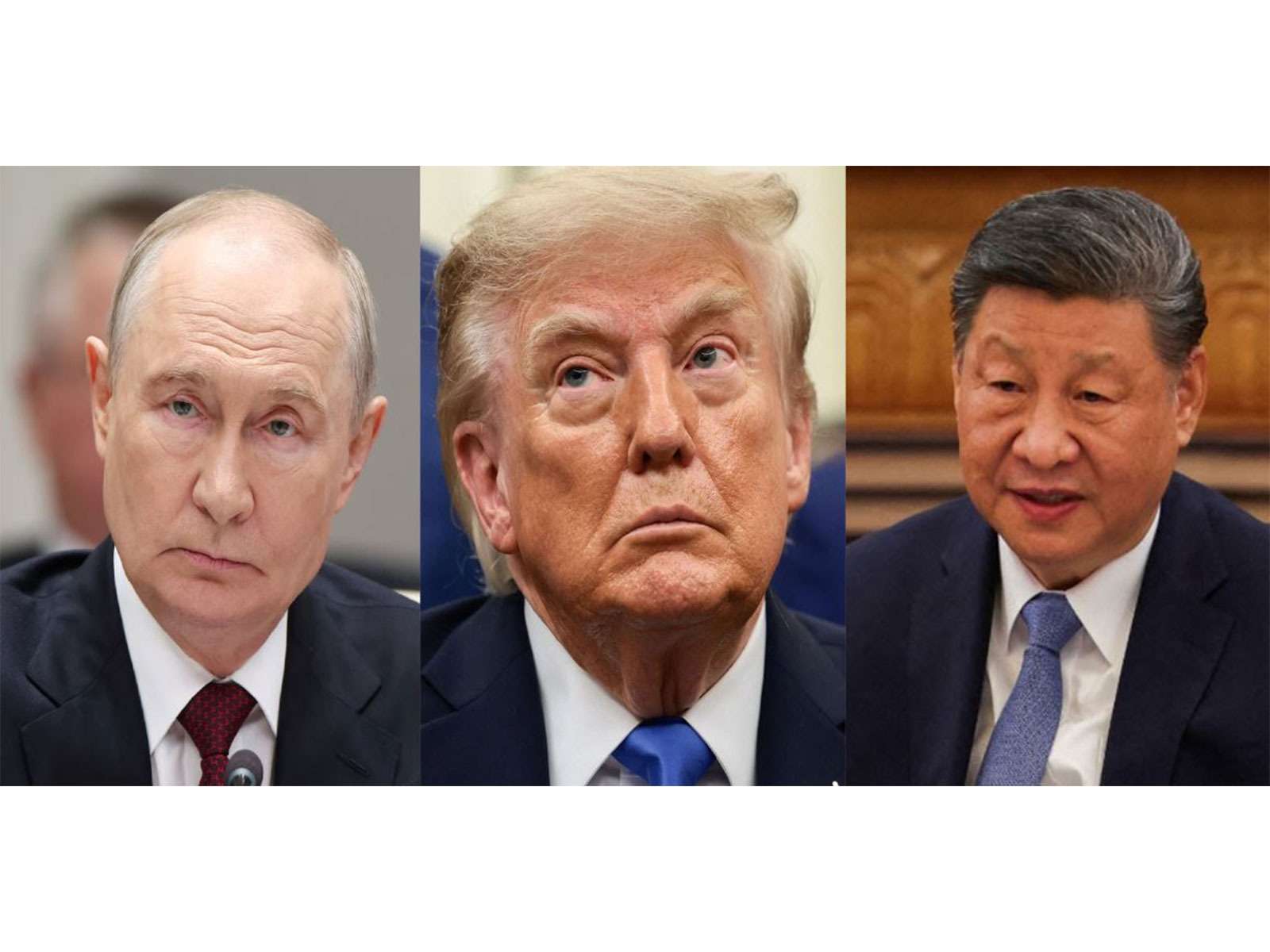
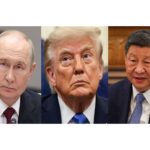
A planned trilateral meeting between US President Donald Trump, Chinese President Xi Jinping and Russian President Vladimir Putin could be a major diplomatic development in world politics. The three leaders are expected to meet on the sidelines of the Asia-Pacific Economic Cooperation (APEC) summit in Shenzhen, China, on November 18–19, 2026, according to the report. Controlling nuclear arms is a key issue for the US administration, with the Iran war, the Ukraine conflict and trade tensions providing a wider strategic context.
But it is too early to see this meeting as the dawn of a new world order or as proof of a new strategic alliance between the three powers. There are opportunities for each country to expand its global influence, but their national interests also clash on fundamental questions of security, sovereignty and economic competition.
So the importance of the meeting will not be in what the leaders say, but whether they can find practical areas of cooperation despite their differences.
Nuclear Arms Control: The Toughest Challenge
One of the biggest problems may be the future of nuclear arms control between the United States and Russia. The New Strategic Arms Reduction Treaty, or New START, limited the strategic nuclear arsenals of the two countries. The report provided says the treaty expired in February 2026, weakening an important framework for managing nuclear competition.
Washington wants Beijing to join a future regime of nuclear arms control. Its argument is that China’s expanding military and nuclear capabilities make a bilateral framework between Washington and Moscow inadequate for the long term.
Beijing, however, insists its nuclear arsenal is much smaller than those of the United States and Russia. It therefore does not consider that participation in trilateral disarmament negotiations on similar terms would be fair or timely.
The difference is the most important obstacle to real progress. The United States wants a larger framework. Russia will want to protect its strategic position. China will likely not accept constraints it perceives as disproportionate to its existing capabilities.
Any arrangement that will work will require transparency, mutual confidence and an understanding of each country’s security concerns. It would help even if they agreed right away to resume technical discussions, or to keep channels of communication open, though this would not be a full-scale arms-control treaty.
Iran, War, and Energy Security
The conflict in Iran could also play a role in discussions. Stability in West Asia is not just a diplomatic issue for China, but is closely linked to energy security, international trade and maritime transportation. Regional instability can impact oil prices, shipping routes and the wider global economy.
In the interim, Russia would like to maintain its diplomatic clout in West Asia. The US may use the meeting to press its own security agenda, and to explore if diplomatic engagement can help manage or end the conflict.
However, a meeting of the three leaders alone cannot guaranty an end to the war. A durable settlement would require the involvement of Iran, the security concerns of the regional states and the positions of the other parties directly involved.
Any arrangement reached without the meaningful involvement of those affected would call into question its legitimacy and long-term viability.
Ukraine: A Problem We Can’t Ignore
Although the report given suggests that Ukraine may not be a major point on the official agenda, the conflict will be relevant to the overall strategic calculations of all three countries.
The meeting presents Russia an opportunity to show it is still a significant actor in global diplomacy, even as the Ukraine war has had repercussions. Direct engagement with Moscow could provide the United States with a channel to discuss nuclear risks and other areas where cooperation remains necessary.
China’s balancing act is more difficult. It has to manage its strategic relationship with Russia, while protecting its economic interests, and keeping up important relationships with the United States, Europe and other trading partners.
Any negotiations affecting Ukraine’s future that would take place without Ukraine’s participation would call into question the sovereignty and legitimacy of any resulting arrangements. Similarly, efforts to redesign European security without significant European participation would face serious political and strategic obstacles. This implies that any sustainable settlement would have to take into account the interests of the directly affected countries, rather than assuming that great power agreement is sufficient in itself.
Is This a New Yalta?
Russian parliament’s foreign affairs committee chairman Pyotr Tolstoy has reportedly said that the meeting could result in a “new Yalta”.
The original Yalta Conference took place in February 1945 when the leaders of the United States, the Soviet Union and the United Kingdom discussed the post-war settlement and the future of international institutions.
But the geopolitical context in 2026 is fundamentally different. The international system today is more complex and multi-polar. India, the European Union, Japan and many regional powers have independent diplomatic, economic and strategic weight.
The international order cannot be redesigned simply through an understanding of three major powers. Smaller and medium-sized states also have legitimate interests and any lasting framework must respect sovereignty, international law and the participation of countries concerned.
Comparisons with Yalta may be politically seductive, but they should not obscure the limits of great-power diplomacy in a more interconnected world.
The leaders’ internal political calculations
The meeting also provides each leader with a chance to flex diplomatic muscle at home.
Direct talks with Xi and Putin could allow Trump to say his administration was able to negotiate with rival powers. But the success of such diplomacy will depend on whether it brings concrete results on arms control, trade or international security.
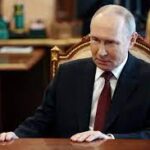
The meeting could allow Putin to reinforce Russia’s image as a major player on the world stage. For his part, Xi could make China the central diplomatic player that can host talks between rival powers.
But domestic political gains should not be confused with substantive foreign policy accomplishments. A good photo op might boost a leader’s image in the public eye, but it’s not necessarily going to solve any underlying dispute. The durability of diplomatic outcomes will depend on institutional commitments, mechanisms for implementation and continuing negotiations.
More than Symbolic Diplomacy
The proposed Trump-Xi-Putin meeting matters because it opens up the possibility of dialog between three countries whose decisions have outsized consequences for global security. Even modest cooperation on nuclear risk reduction, crisis communication and conflict management could help to promote international stability.
But personal relationships among leaders cannot eliminate structural disagreements. The nuclear competition, the Ukraine conflict, the war with Iran and economic tensions are the outcome of competing national interests and complex regional realities.
So the meeting must be judged by three practical criteria: whether it produces credible steps to reduce nuclear risks, whether it establishes sustained channels for managing international crises, and whether any agreements respect the sovereignty and interests of affected countries.
The real diplomatic achievement would not be the declaration of a new world order, but the establishment of rules and communication mechanisms that reduce the risk of war, strengthen international stability and encourage cooperation without giving any single power the right to determine the future of others.
The most important outcome in an increasingly competitive international system may be modest rather than historic: an agreement to keep talking, greater clarity about strategic intentions, and a commitment to keep rivalry from becoming direct confrontation. This would not be as dramatic as a geopolitical realignment, but perhaps more valuable to world peace.