
UN Warns of Rising Nuclear Risks Amid Global Tensions
UN leaders call for disarmament, stronger safeguards and renewed dialogue as nuclear risks and arms-control concerns grow.

- UN marks International Day for Total Elimination of Nuclear Weapons.
- Guterres warns of the most dangerous nuclear moment since the Cold War.
- States raise concerns over expanding arsenals and weakening arms-control frameworks.
- Leaders call for dialogue, disarmament and stronger nuclear safeguards.
By Anjali Sharma
UNITED NATIONS –World body on Tuesday held a meeting on the sidelines of the high-level session to commemorate the International Day for the Total Elimination of Nuclear Weapons.
The Day allows the international community to reaffirm its commitment to global nuclear disarmament and raise public awareness about the threat posed by nuclear weapons and the necessity for their total elimination.
It help mobilize international efforts toward the common goal of a nuclear-weapon-free world.
UN Member States discussed the core issue of disarmament, closing out the General Assembly’s High-Level Week with expected calls for greater safeguards in the midst of rising tensions, extreme weather impacts and strikes on nuclear infrastructure in war-torn Iran and Ukraine.
Khalilur Rahman, President of the General Assembly, recalled that, as of January 2026, the global inventory stood at more than 12,000 nuclear warheads, compared to a peak of roughly 70,000 warheads in 1986.
“Of particular concern, between 2,100 and 2,200 are kept in a state of high operational alert on ballistic missiles, capable of being launched at very short notice,” he stressed.
He added that for the first time since the end of the Cold War, the global stockpile is expected to grow again, as new and more modern warheads enter arsenals faster than retired ones are dismantled.
“New technologies including artificial intelligence, cyber capabilities and advanced delivery systems — are introducing additional uncertainty into command, control and decision-making,” he said, adding that global military expenditure reached nearly $3 trillion in 2025.
He also emphasized that, on 5 February 2026, New START (Strategic Arms Reduction Treaty) expired without a successor: “For the first time since 1972, there are no binding limits on strategic nuclear arsenal.”
The combination of proliferating conflicts, eroding arms-control arrangements and renewed reliance on nuclear weapons creates a perilous moment for international peace and security, he observed.
“We must change course, urgently and decisively,” he stated, calling for action on four fronts.
“First, we must restore dialogue and guardrails,” he said, urging the super powers to return to the negotiating table without delay.
“Second, we must uphold and strengthen the multilateral architecture that has helped to restrain nuclear dangers for decades.”
He stressed that the Treaty on the Non-Proliferation of Nuclear Weapons remains the cornerstone of global efforts to prevent the spread of nuclear weapons, advance nuclear disarmament and promote cooperation in the peaceful uses of nuclear energy.
“Third, we must move from managing arsenals to reducing and eliminating them,” he said, urging nuclear-weapon States to fulfil their disarmament obligations and commitments.
“Fourth, we must mobilize people,” he underscored, adding that the purpose of this International Day is not only to commemorate, it is also to educate and mobilize.
“Survivors, civil society, youth, scientists and educators keep before us the human cost and the possibility of another path.”
UN head António Guterres said “We meet at the most dangerous nuclear moment since the end of the Cold War.”
He pointed to expand and modernize nuclear arsenals, louder nuclear sabre-rattling and increased odds of mistakes due to technological advances.
Guterres voiced concern the expiration of the New START ( Strategic Arms Reduction Treaty) and the failure of the Eleventh Review Conference of the Treaty on the Non-Proliferation of Nuclear Weapons to reach consensus on a substantive outcome.
He lamented “And just when they are most needed, the safeguards built over decades to contain these dangers are breaking down.”
The United Nations Disarmament Commission completed its three-year cycle without substantive recommendations, he added.
He said “These are not simply diplomatic disappointments they are warning signs,” he stressed, cautioning: “Rising risks and crumbling guardrails are a one-way ticket to disaster.”
Guterres underscored that “disarmament is not a favour” but “a binding legal obligation”
He called on nuclear-weapon States to return to dialogue, reduce the role of nuclear weapons in their security policies and pursue confidence-building measures that ensure transparency.
Guterres urged the United States and the Russian Federation to negotiate a successor framework to New START and stressed that it is “beyond time” to bring the Comprehensive Nuclear-Test-Ban Treaty into force.
“These devices of death must never decide the fate of humanity,” he stated, calling for threats to be replaced with dialogue, arms racing with arms control and paralysis with concrete action.
He said that humanity has lived under the nuclear shadow for more than eight decades, he observed, urging States to “choose a future free from nuclear weapons”.
Gaukhar Mukhatzhanova, a fellow with the UN Institute for Disarmament Research an autonomous institute studying disarmament and international security issues said “The situation right now is very difficult,” said.
“We are observing the disintegration of the arms control architecture that was built primarily through negotiations between [the then] Soviet Union – and subsequently Russia – and the United States.”
The global system governing nuclear disarmament is facing its most serious crisis in decades, driven by growing mistrust among major powers and the steady erosion of arms control agreements, she cautioned.
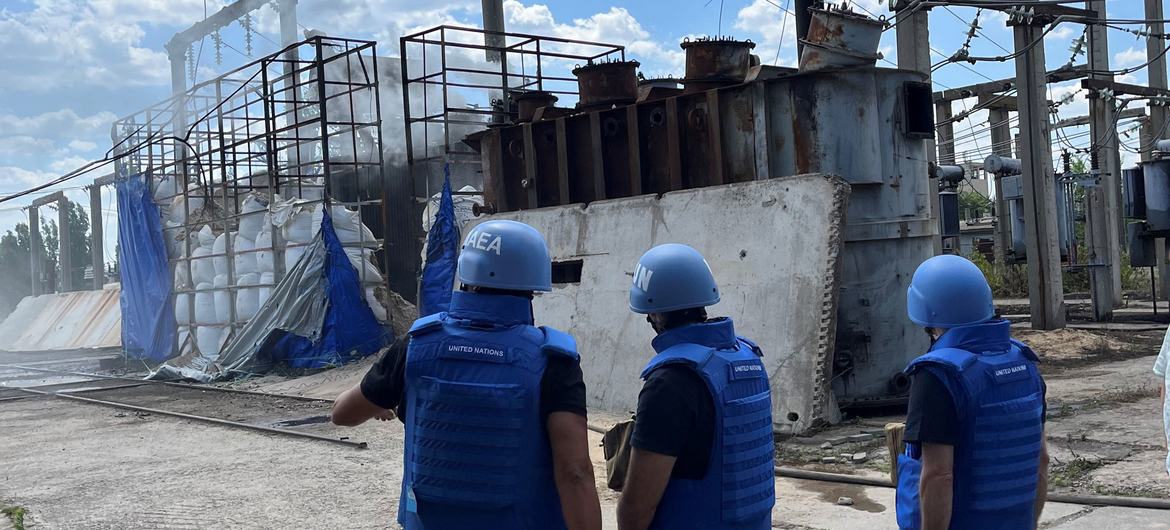
She noted that when Israel and the US launched a war against Iran in February, the UN atomic energy agency, IAEA, handled reports from Iranian authorities following airstrikes near its nuclear energy infrastructure.
In Japan, when a massive earthquake in 2011 triggered a major accident at the Fukushima Daiichi Nuclear Power Station, IAEA mobilized to review data, monitor the situation and development an action plan.
In March 2022, after Russia’s full-scale invasion of Ukraine, which operates nuclear power stations, IAEA introduced Seven Indispensable Pillars for nuclear safety and security in armed conflict to address the unprecedented challenge of maintaining safety and security when such facilities are in a warzone:
The Observer for the State of Palestine Riyad Mansour said that “Israel’s persistent exceptionalism threatens the security of our region and by extension the rest of the world”, adding that the country is the driving force of proliferation in the region and still has not ratified several weapons agreements, including the Comprehensive Test Ban Treaty.
Israel’s officials act above the constraints of the law, justify their possession of nuclear weapons and “publicly threaten to use them against our people and peoples of the region”.
The bombs dropped on Hiroshima and Nagasaki are a reminder that there is no justification for the possession of these weapons.
Palau’s representative, spoke on behalf of the Pacific Islands Forum, said they, as custodians of the world’s largest ocean, affirm that true security cannot be achieved through the threat or use of nuclear weapons.
“For decades, parts of the Pacific were treated as a testing ground for foreign powers,” he recalled. “Although nuclear testing has ceased, its consequences remain.”
Pacific communities continue to live with trans generational health impacts, contaminated environments and the loss of ancestral lands and livelihoods.
He recalled this year’s fortieth anniversary of the South Pacific Nuclear Free Zone Treaty, or Rarotonga Treaty, which “remains one of the Pacific’s enduring contributions to the global disarmament and nonproliferation architecture”.
The Pacific remains committed to strengthening the international legal framework for nuclear disarmament and non-proliferation, including through the Treaty on the Non-Proliferation of Nuclear Weapons, as well as the indispensable work of the International Atomic Energy Agency, he stated.
Iran’s representative, aligned with the statement by Uganda on behalf of the Non-Alignment Movement, recalled the unlawful military attacks by the United States and the Israeli regime against his country, including strikes against peaceful nuclear facilities under IAEA comprehensive safeguards.
“Attacks against safeguarded peaceful nuclear facilities must be unequivocally condemned and rejected,” he stressed, as they carry grave risks of radioactive release, while striking at the integrity of safeguards and the international non-proliferation regime.
“Iran’s peaceful nuclear programme is conducted within its rights and obligations under the NPT (Non-proliferation Treaty) and IAEA (International Atomic Energy Agency) safeguards,” he underscored.
“Nuclear disarmament is a legal obligation, not a discretionary political objective,” he said, calling on the nuclear-weapon States to commence negotiations, without further delay, on a comprehensive, non-discriminatory and legally binding instrument providing for the total elimination of nuclear weapons.
He reiterated Iran’s support for universal and unconditional, legally binding negative security assurances prohibiting the threat or use of nuclear weapons against non-nuclear-weapon States.
The inalienable right to develop and use nuclear energy for peaceful purposes must be fully respected without discrimination, he concluded.
UAE envoy underscored the special responsibility of nuclear-weapon States to translate their commitments into “transparent and tangible steps that are actionable and irreversible.”
He noted that measures to reduce the risk of inadvertent escalation, although important, cannot substitute for the objective of total nuclear disarmament.
Ambassador highlighted the role of the International Atomic Energy Agency in enhancing trust and transparency in the peaceful nature of nuclear programmes.
He stressed the need to protect nuclear facilities used for peaceful purposes. “Their safety and security cannot be targeted by any military threats or aggressions,” he stressed.
Targeting such facilities could have consequences extending beyond national borders and “threaten the environment, safety, security of the region and the world at large,” he warned.
He condemned “in the strongest words” the 17 May 2026 drone attacks targeting the Barakah Nuclear Power Plant, noting that the facility is used for peaceful purposes and operates under high safety and security standards.
Uganda spoke on behalf of the Non-Aligned Movement, said that during the nineteenth summit of the Non-Aligned Movement, held in January 2024 in Kampala, Member States reaffirmed the principled position that nuclear disarmament has been and remains its highest priority.
“The Heads of State and Government of the Movement stressed that progress in nuclear disarmament and nuclear non-proliferation in all its aspects is essential to strengthening international peace and security,” he said, adding they stressed the importance of ensuring efforts at nuclear non-proliferation run parallel to efforts aimed at nuclear disarmament.
The Movement welcomes the convening of five successful sessions of the Conference on the Establishment of a Middle East Zone Free of Nuclear Weapons and Other Weapons of Mass Destruction according to the General Assembly Decision 73/546 and acknowledges their constructive outcomes.
He said that the Non Aligned Movement States Parties to the NPT (Non-proliferation Treaty) continue “to express deep concern over the long delay in the implementation of the Resolution on the Middle East adopted at the 1995 NPT Review and Extension Conference calling for establishment of a nuclear-weapon-free zone in the Middle East”.
Oman delegate said “The total elimination of nuclear weapons in a transparent, verifiable, irreversible manner and within a specified time frame remains the sole guarantee for ending this threat,” was speaking on behalf of the Arab Group, rejected attempts to justify possession of such weapons by deterrence or strategic stability.
He warned against the risks of integrating artificial intelligence into nuclear weapons related systems and stressed the need to maintain “full human control” over such weapons.
On the Middle East, he noted that Arab States have demonstrated their commitment to the non-proliferation regime through their accession to the NPT (Non-proliferation Treaty) and efforts towards its universality.
He said Israel’s continued refusal to place its nuclear facilities under the comprehensive safeguards system of the International Atomic Energy Agency “remains a strategic deficiency that undermines confidence and risks triggering an arms race in the region”.
He called for implementation of commitments to establish a Middle East zone free of nuclear weapons and other weapons of mass destruction and condemned “in the strongest terms” nuclear threats made on 5 November 2023 by a minister in the Israeli Government against the Palestinian people in the Gaza Strip.
Chinese envoy said “The complete prohibition and thorough destruction of nuclear weapons and the ultimate realization of a world free of nuclear weapons serve the common interests of humanity,” .
“A certain country keeps adjusting its nuclear policy, stubbornly maintains a massive nuclear arsenal, constantly enhances its nuclear deterrence and war fighting capabilities, strengthens nuclear alliances,” he observed.
“Countries possessing the largest nuclear arsenals should effectively fulfil their special and primary responsibilities for nuclear disarmament and continue to make drastic and substantive reductions in their arsenals,” he said.
China advocates that nuclear-weapon States should conclude a treaty on mutual no first use of nuclear weapons or reach a political statement in this regard, he continued.
“China has always followed a nuclear strategy of self-defence, keeps its nuclear capabilities at the minimum level required for national security and does not engage in any form of nuclear arms race,” he stated.
Kazakhstan recalled that, 35 years ago, his country closed the Semipalatinsk nuclear test site, where 456 nuclear explosions had left “a devastating legacy for our people and environment”, and subsequently voluntarily renounced the nuclear arsenal inherited from the Soviet Union.
“Our experience has taught us a simple truth: security cannot be built on the threat of annihilation. It must be built on trust, dialogue and responsible choices,” he stated.
It marked the thirtieth anniversary of the opening for signature of the Comprehensive Nuclear-Test-Ban Treaty, he called on all remaining Annex 2 States to sign and ratify it without further delay.
He also highlighted the twentieth anniversary of the Treaty on a Nuclear-Weapon-Free Zone in Central Asia and reaffirmed Kazakhstan’s commitment to strengthening cooperation among nuclear-weapon-free zones worldwide.
Kazakh envoy voiced concern over the modernization and expansion of nuclear arsenals, weakening arms control arrangements, growing geopolitical tensions and emerging technologies, he called for renewed strategic dialogue among nuclear-weapon States “to reduce tensions, prevent an arms race and lower the risk of nuclear confrontation”.
He stressed that “Dialogue must prevail”.
Fijian representative spoke on behalf of the Pacific small island developing States said that between 1946 and 1996, more than 300 nuclear tests were conducted across the region, including in the Marshall Islands, Kiribati and French Polynesia.
“The consequences of those tests remain with us today, in contaminated land and waters, in health effects carried across generations and in communities still awaiting full acknowledgement and redress,” he said.
“It is from that experience that we speak today.”
As custodians of a region shaped by the legacy of nuclear testing, the group reaffirms its vision of a peaceful and nuclear-free Pacific, and a shared commitment to the total elimination of nuclear weapons. It has given that commitment substance through sustained regional action.
The Treaty of Rarotonga, which marks the fortieth anniversary of its entry-into-force this December, established one of the world’s first nuclear-weapon-free zones.
In July, with Tonga’s ratification, the Comprehensive Nuclear-Test-Ban Treaty achieved universal ratification across the Pacific.
A majority of the Group’s members are also States Parties to the Treaty on the Prohibition of Nuclear Weapons. “These milestones reflect decades of consistent effort by our Governments and our peoples toward a world free of nuclear weapons,” he said.
“We note with concern that international momentum has not kept pace.” The Group calls on all States to recommit to meaningful progress on nuclear disarmament, consistent with their existing legal obligations.
Japan representative said, “precisely because we find ourselves in such a difficult environment, we must have the determination to engage in sincere dialogue, build mutual trust and seek common ground.”
The framework for dialogue and conversation must be strengthened, he stressed.
His country will continue to work with all States to fortify the Treaty on the Non-Proliferation of Nuclear Weapons regime and to identify areas of common ground.
The nations must build political momentum for concrete measures, he added, in a realistic and practical manner and pass the lessons of the past on to the next generation.
“As the only country to have ever suffered atomic bombings during war, Japan has a responsibility to ensure that these lessons are passed on to future generations,” he said.
Ireland envoy said “Regrettably, nuclear risk is growing more acute while garnering less attention than it should,” drawing a comparison with artificial intelligence as an existential threat.
He called on nuclear-armed States to fulfil their disarmament obligations, “which they are ignoring”.
The technology is transforming the world, the fundamental facts about nuclear weapons remain unchanged, he said.
He noted the Russian Federation’s nuclear threats against Ukraine and its illegal occupation of the Zaporizhzhia nuclear power plant both of which are “dangerous and unacceptable”.
“As we confront a dangerous period of existential risk, we must return to multilateral leadership and trust-building,” he said, emphasizing that lasting security cannot be built on a foundation of mutually-assured destruction.
Pakistan’s representative warned of a “deeply troubling international security backdrop” with intensifying great Power rivalries, while “long-standing disputes remain unresolved”.
International norms are applied selectively with double standards creating asymmetries and nuclear-armed States pursuing “hegemonic designs”.
“Our own region” has demonstrated how “domestic compulsions and reckless bravado can drive States toward confrontation with attendant nuclear dangers”.
He called for cooperation alongside international and regional security, as “absent this, the world will need to prepare for an era of heightened nuclear dangers”.
Ukraine recalled it was his country that, without precedent, gave up its nuclear arsenal, receiving assurances from nuclear-weapons States, including the Russian Federation, of respect for Ukraine’s sovereignty.
“Tragically, all those commitments were not honored. Many Ukrainians are convinced, today, that had our government not given up its nuclear weapons Russia would never have dared to attack Ukraine. And perhaps they are right.”
He said that trust in nuclear disarmament can only be restored if the Council forces the Russian Federation to stop its barbaric war of aggression against Ukraine.
He said that credibility of non-proliferation can only be established once a comprehensive just and lasting peace is achieved, and his country has ironclad security guarantees.
The high-level plenary meeting of the General Assembly is to commemorate and promote the International Day for the Total Elimination of Nuclear Weapons
It aims to raise awareness about the threat posed by nuclear weapons and will contribute to mobilising efforts towards the common goal of a nuclear-weapon-free world
The US dropped atomic bombs on Hiroshima and Nagasaki in Japan in August 1945, the only time such weapons have been used in populated areas
Over 12,400 nuclear weapons remain in existence today, despite efforts to reduce these arsenals
On the lawns of the UN Headquarters campus sits Good Defeats Evil, sculpted by Georgian-Russian artist Zurab Tsereteli.
It was visible from First Avenue the sculpture is dominated by the figure of St. George sitting on horseback slaying a dragon.
The dragon is created from the shards of two dismantled nuclear missiles, a Soviet SS-20 and an American Pershing II, which were destroyed under the terms of the Elimination of Intermediate-Range Nuclear Forces (INF) Treaty in 1987.
The gift was presented by the then Soviet Union in 1990 on the occasion of the 45th anniversary of the UN.
