
Supreme Court Flags ‘Painful Parallels’ With Nirbhaya Case
Delhi-NCR rape cases highlight systemic gaps in public safety and law enforcement, says Supreme Court

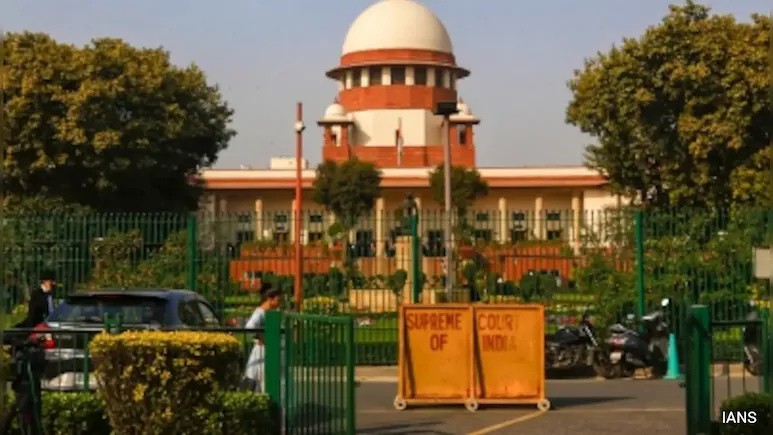
- SC takes suo motu cognisance of recent Delhi-NCR rape cases.
- Court cites “painful parallels” with the 2012 Nirbhaya case.
- Public safety gaps flagged in parks, buses and other public spaces.
- Accountability stressed beyond expressions of solidarity.
GG News Bureau
New Delhi, 28th Sept: The Supreme Court has taken suo motu cognisance of a series of rape cases reported in Delhi and surrounding areas, including the alleged gang rape of a minor on a sleeper bus, and observed that the incidents bear “painful parallels” with the 2012 Nirbhaya case.
A bench headed by Justice JB Pardiwala said the recent incidents point to a failure of law enforcement and public administrative authorities to ensure basic safety in public spaces.
“The reports of rape cases in Delhi-NCR starkly underline a systematic failure on the part of the law enforcement and the public administrative authorities to guarantee basic public safety,” the bench observed.
The court said public spaces such as parks and buses cannot become high-risk zones because of inadequate lighting, poor surveillance or a lack of essential administrative facilities.
The observations came days after a 17-year-old girl, who had gone to Delhi’s Kalkaji Mandir on her birthday, was allegedly gang-raped in a nearby park by men who reportedly posed as policemen.
The court stressed that merely expressing solidarity with victims was insufficient and that accountability must be fixed.
“Merely expressing solidarity is not enough,” Justice Pardiwala said, adding that “one cannot help but draw painful parallels to the Nirbhaya incident of 2012.”
Reference to 2012 Nirbhaya Case
The Nirbhaya case involved the gang rape of a 23-year-old woman on a moving bus in Delhi in December 2012. She later died from her injuries, triggering widespread protests and leading to significant changes in India’s laws relating to sexual offences and crimes against women.
The Supreme Court’s observations also referred to a case reported in August involving a teenager who was allegedly gang-raped on a moving sleeper bus while travelling from Uttar Pradesh’s Mainpuri towards Noida.
According to the report, the sleeper bus had curtains covering the berths, which the accused allegedly used to conceal the crime. The bus also reportedly did not have a functional CCTV system, despite requirements introduced following the 2012 Nirbhaya case.
The Supreme Court noted that such incidents raise concerns about whether existing safety measures are being effectively implemented in public transport and other public spaces.
Court Highlights Public Safety Concerns
The bench underlined the need for authorities to address gaps in surveillance, lighting and other basic infrastructure that can contribute to unsafe conditions.
The court’s suo motu proceedings bring the broader issue of public safety and institutional accountability before the judiciary, rather than limiting the focus to individual criminal cases.
The Nirbhaya case had resulted in amendments to India’s criminal laws, including changes to the legal framework governing sexual offences and enhanced punishments for certain crimes against women.
Of the six accused in that case, one was a juvenile. One accused subsequently died in jail, while the remaining four were executed at Delhi’s Tihar Jail.
The latest proceedings come against the backdrop of multiple rape cases reported in Delhi-NCR, with the Supreme Court seeking to examine wider concerns relating to public safety, law enforcement and administrative accountability.
