
Trump, Xi to ease tariffs on $60b trade
US and Chinese leaders agree on tariff recommendations covering $60 billion in two-way trade and open dialogue on advanced AI.

By Anjali Sharma
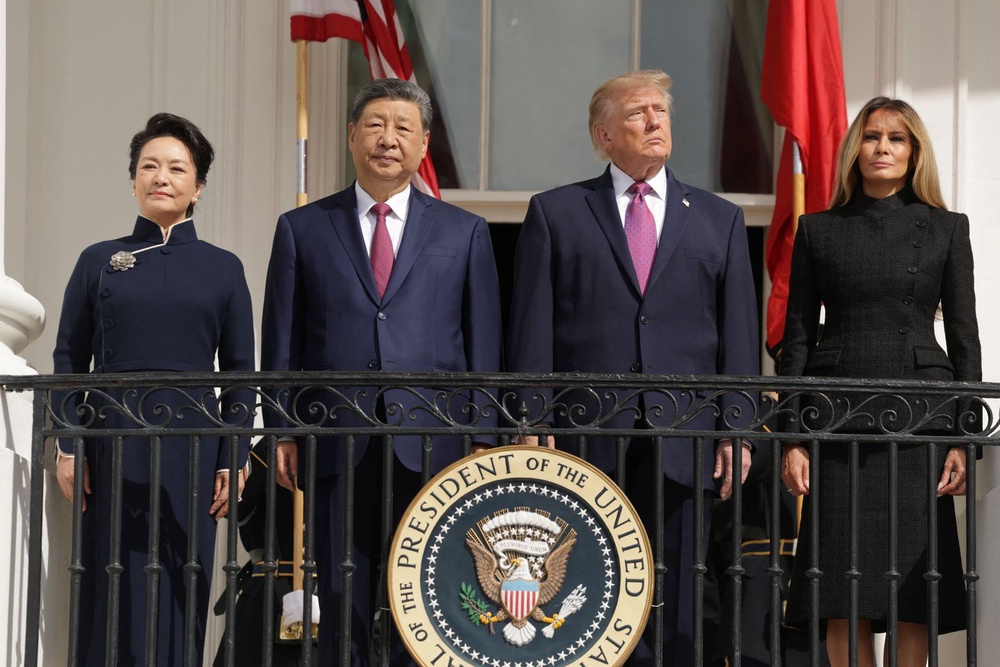
WASHINGTON – US President Donald Trump and his Chinese counterpart Xi Jinping on Saturday have announced to ease tariffs covering $60 billion in two-way trade and opened a new dialogue on advanced artificial intelligence, in a major economic and technology outcome from Xi Jinping’s state visit, White House stated.
A White House fact-sheet stated that the US-China Board of Trade reached consensus on recommendations for “more favorable tariff treatment” covering $30 billion of non-sensitive goods in each direction, media reported.
It said that China’s official account described an “arrangement for a 30-billion-US-dollar reciprocal tariff reduction” and stated that both leaders directed their officials to implement it.
Hey had not disclosed the proposed tariff rates, the size of the reductions or when the changes would take effect.
The fact sheet stated that the American goods covered by the recommendations include agricultural products, fish and seafood, logs and wood products, cosmetics and medical devices, while the Chinese products include small appliances, toys, holiday decorations and children’s car seats.
The Board of Trade created a working group to address barriers facing agricultural trade.
The mechanism and a separate US-China Board of Investment were chartered during Donald Trump and Xi Jinping’s summit in Beijing in May and formally put into operation during the Washington visit.
The investment board will discuss potential projects and obstacles.
It is intended to provide a regular channel for commercially significant investment disputes.
The White House said China would import at least 10 million metric tonnes of US coal in 2027 and at least another 10 million tonnes in 2028. The commitment was not included in China’s published list of summit outcomes.
The rare earths remained unresolved, with Washington stating that the countries were continuing to work on American concerns about shortages of rare earths and other critical minerals.
The goal was to restore shipments to appropriate levels.
China’s statement did not mention the issue.
According to China’s Foreign Ministry, Xi Jinping said stable economic relations required cooperation as well as competition.
“Cooperation is a two-way street. To keep the economic and trade ties stable, the list of cooperation needs to be lengthened, and the list of issues shortened,” he said.
The technology remained another major part of the talks.
White House said the two world leaders agreed to use the term “super intelligence” rather than “artificial intelligence” for the emerging technologies covered by their discussions.
