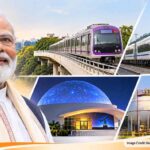
- Cabinet approves 8.449-km Aqua Line extension.
- Five elevated stations to connect Noida Sector-51 with Greater Noida Sector-04.
- Interchange planned with Delhi Metro’s Blue Line at Sector-61.
- Active metro network in Noida and Greater Noida to reach 71.878 km.
GG News Bureau
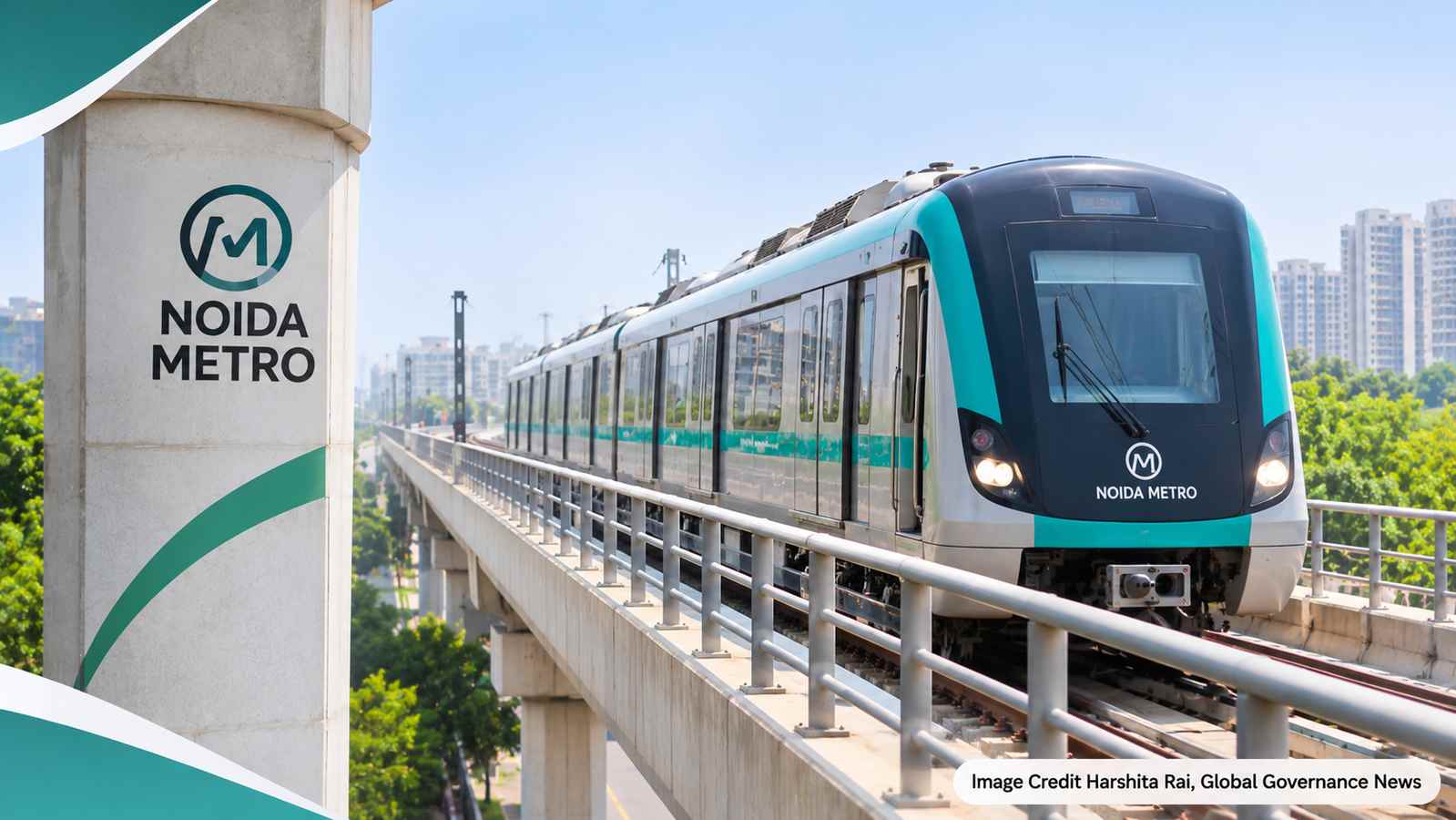
New Delhi, 11th Nov: The Union Cabinet, chaired by Prime Minister Narendra Modi, has approved an 8.449-km extension of the Aqua Line Metro corridor from Noida Sector-51 to Greater Noida Sector-04, adding five elevated stations to the Noida Metro Rail network.
The proposed extension is expected to improve connectivity between Noida and Greater Noida, linking residential neighbourhoods, commercial centres, offices, educational institutions and healthcare facilities. Once operational, the combined active metro network in the two cities will extend to 71.878 km.
A key feature of the project will be an interchange at Noida Sector-61 with the Delhi Metro Blue Line, providing commuters with improved access to the wider Delhi-NCR transport network.
Connectivity to Residential and Commercial Hubs
The extension will connect several important locations, including Gaur City Mall, H&S Mall, Blue Sapphire Mall, commercial spaces in Greater Noida Sector-04, IKEA near Noida Sector-51 and Anthurium Mall in Sector-73.
The corridor is also expected to improve access to offices and business centres, including Tech Mahindra and TCL Tech in Sector-60, the Oil Industry Development Board in Sector-73 and Golden I commercial space in Greater Noida Sector-04.
Educational and healthcare institutions expected to benefit include Delhi Public School in Sector-122, Kailash Hospital, Rama Hospital in Sectors 70 and 62, and Cloud9 Hospital in Sector-51. Residential areas such as Cleo County in Sector-122 and Gaur City 1 and 2 are also among the locations identified for improved connectivity.
Expected Impact on Urban Mobility
The extension is expected to provide commuters with an alternative to road transport, helping reduce traffic congestion and travel time. Improved metro access could also support economic activity around the new stations by making commercial and employment centres more accessible.
The expansion is expected to encourage greater use of public transport, potentially reducing dependence on private vehicles and lowering transport-related carbon emissions.
The project is also expected to improve access to essential services and transport hubs, benefiting residents, workers, students and visitors across Noida and Greater Noida.
With the addition of the new corridor, the metro network is expected to play a wider role in supporting urban growth, improving daily mobility and strengthening public transport infrastructure across the region.