By Anjali Sharma
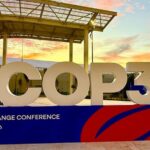
UNITED NATIONS – COP31 on Tuesday identified marine life with a cup of seawater to drawing on Indigenous knowledge to prevent wildfires, scientists and communities showcased both cutting-edge and time-tested ways to protect nature.
It said that turning innovation into action remains a challenge, with funding gaps persisting and ministers struggling to bridge divisions over fossil fuels and climate finance as negotiations enter their final days.
New research finds that more than 95 per cent of coastal and island nations include ocean measures in their climate plans.
Twenty-three countries endorse a wildfire prevention plan that draws on Indigenous knowledge and science.
Dominica, Myanmar and Honduras top a new ranking of countries hardest hit by extreme weather over 30 years.
A draft text leaves ministers with major differences to resolve before Friday’s deadline. COP31 is set to close on 20 November.
Bob Marley’s Get Up, Stand Up greeted ministers arriving at COP31 in Antalya on Tuesday, as protesters urged them to fight for climate justice.
“Standing up” is the easy part. Reaching agreement is proving considerably harder.
The 18-page draft cover decision circulated remains a maze of competing proposals, while ministers take turns outlining national priorities in the plenary.
Despite their critical role in regulating the climate, oceans have often been overlooked in international climate negotiations.
They feature prominently in the first draft of a possible COP31 deal, reflecting efforts by co-hosts Australia and Türkiye to strengthen ocean-related climate action.
Whether those provisions survive the final round of negotiations, however, remains uncertain.
Marine Lecerf, Head of International Policy at the Ocean and Climate Platform, the priority is not securing new commitments but delivering on existing ones.
“We’re not asking for a new mandate, we’re asking for acceleration,” she told journalists on Tuesday.
A new analysis presented at COP31 underscores that challenge. More than 95 per cent of coastal and island nations now include ocean-related measures in their national climate plans, the study found. Yet around 60 per cent of those commitments depend on additional financing or technical support.
Brianna Fruean, a Pacific youth climate envoy, that funding gap is already being felt by communities taking adaptation into their own hands.
In Fiji, residents of Naidiri village have financed their own marine protected area, restoring coral reefs and fish stocks to safeguard the waters on which they depend.
“They shouldn’t be taking money out of their own pockets to pay for these adaptation measures,” she said.
The ocean has been one of humanity’s greatest allies against climate change, absorbing around 90 per cent of the excess heat generated by global warming. But that protection comes at a cost, as warming waters threaten coral reefs, fisheries and coastal communities.
Yet much of the ocean remains unexplored.
Joanna Post, Head of Ocean Observations at UNESCO’s Intergovernmental Oceanographic Commission said “Satellites cannot see beyond the surface of the ocean,”.
“We’ve only mapped about 28 per cent of the seafloor. And there are species out there we haven’t yet discovered.”
To close those knowledge gaps, UNESCO and its partners are turning to an unlikely source: a cup of seawater.
Using environmental DNA, or ‘eDNA’, scientists can identify species from the genetic traces they leave behind.
UNESCO’s eDNA Expeditions programme is using the technology at 25 marine sites worldwide, with local communities and schoolchildren helping collect samples every three months.
As warming waters drive species into new habitats, the findings could help governments identify which marine areas most need protection.
Canada and the European Union sought additional support for the OceanEye International Alliance, a partnership with UNESCO aimed to strengthen global ocean monitoring.
“Ocean observations and data have quietly informed decision-making for a long time,” Post said. “They’re often unrecognized, but they’re powerful.”
She called for sustained investment in ocean monitoring rather than continued reliance on short-term research projects.
Türkiye also unveiled its Marine Litter Action Platform on Tuesday, connecting pollution-prevention initiatives with expertise and financing, including efforts to tackle abandoned fishing nets that entangle turtles, seabirds and other marine wildlife.
Indigenous communities have long relied on the stars, clouds and movements of animals to anticipate rains, droughts and other environmental changes.
“They are our best school and our best technology,” Indigenous climate advocate Hindou Oumarou Ibrahim told UN News, describing knowledge passed down through generations.
That same wisdom is helping countries rethink how they prepare for increasingly destructive wildfires.
Some 23 countries endorsed the Antalya Action Plan on Integrated Fire Management, backed by the UN Food and Agriculture Organization shifting the focus from fighting fires to preventing them.
FAO forestry expert Amy Duchelle told that “Learning from Indigenous Peoples’ traditional practices and uses of fire can really help teach us how to live with good fire,”.
The approach includes carefully managed burning to maintain healthier landscapes, reduce fuel loads and lower the risk of devastating wildfires.
As countries showcased new ways to protect nature, a new report released at COP31 highlighted the growing human cost of climate change.
Dominica, Myanmar and Honduras were the countries hardest hit by extreme weather over the past three decades, according to German watch’s Climate Risk Index 2027.
Honduras’s Vice Minister of Finance, Roberto Chang López, told journalists “Behind these figures are families who lost their homes, children unable to attend school, farmers who lost their crops, and communities isolated for weeks.”
He recalled the devastation caused by Hurricane Mitch.
The ranking examined not only economic losses but also deaths and the number of people affected by disasters, including those injured or displaced, across 178 countries.
According to the NGO, extreme weather claimed more than 916,000 lives and affected over 5.5 billion people worldwide between 1996 and 2025.
Heat waves accounted for 40 per cent of deaths, while floods affected the greatest number of people.
Jamaica topped the ranking after Hurricane Melissa, ahead of Sri Lanka and Spain.