
Jaishankar Says Global South Is ‘Front Row’ in Crises, ‘Back Row’ in Decisions

By Anjali Sharma
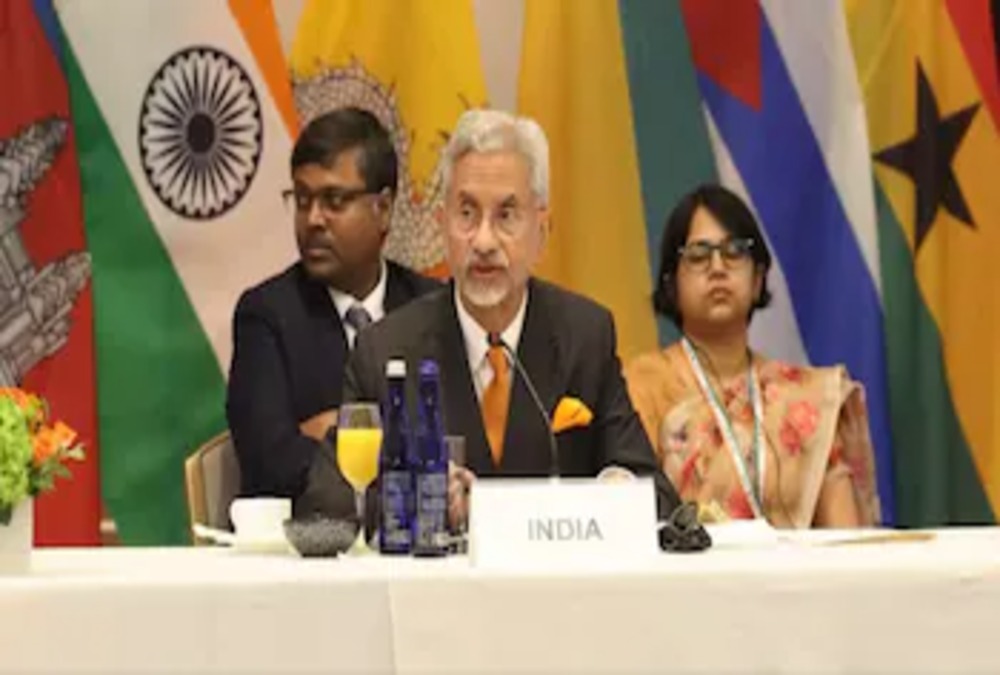
NEW YORK – External Affairs Minister S Jaishankar on Wednesday said that the Global South may be in the “front row” of global crises but remains in the “back row” of decision-making.
He stressed that reforming the United Nations and multilateralism is essential to address its priorities.
Jaishankar said in his opening remarks during the High-Level Ministerial Meeting of Like-minded Global South Countries and Friends that “We can see that in conflicts and geopolitical tensions, in disruption of supply chains, in increasing trade barriers, fragmented investment flows, climate shocks, and the fact international norms and rules are under great pressure”.
“Now, the fact is also that institutions created for a different era continue to reflect the power structures of that era, and Global South today may be in the front row of global crises but is in the back row of decision-making,” he added.
He stated that, for the Global South, there has never been a moment as critical as right now for solidarity.
“The Global South needs to be part of decision-making structures that deliberate on issues that directly pertain to our future,” he remarked.
EAM emphasized that “closer economic cooperation among the Global South is necessary to buffer us against the fallout of overlapping global crises.”
He listed several priority areas where the nations of the Global South need to act due to the fallout from crises or the exercise of power by the North.
“Choke points” in supply chains, finance or connectivity should not be legitimised, while the seas must be secured for all, with guarantees for the safety of commercial shipping and seafarers under international law. The Global South must “swiftly address challenges” to food security, particularly the supply of grains and fertilisers, the EAM stated.
He said that the Global South should work for “fair economic and trade practices, which enhance our production capabilities and do not reduce us to mere consumers” and “our right to industrialise must not be denied”.
Jaishankar suggested reducing dependence on the North for technology and frameworks for international cooperation.
He stressed that artificial Intelligence must remain “human-centric” and “we should share indigenous-developed tools and frameworks for the benefit of Global South members”.
Jaishankar added that instead of relying solely on the Global North, alternative “frameworks such as the International Solar Alliance and the Coalition for Disaster Resilient Infrastructure and others could bring about much-needed progress on climate action”.
