Poonam Sharma
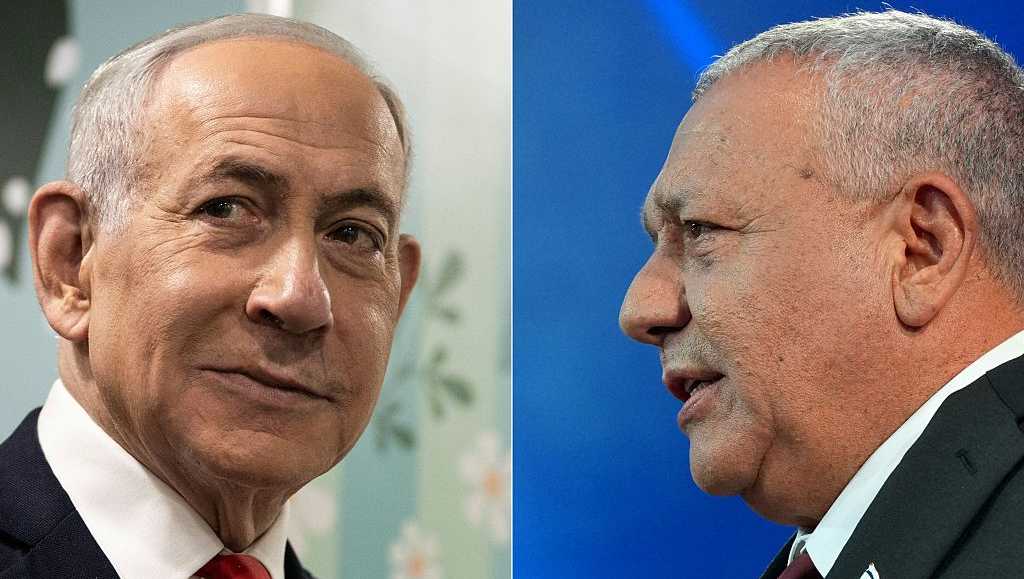
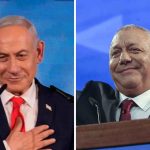
Israel’s election on October 27 has produced one of the most important coalition puzzles in the country’s recent political history. Neither Prime Minister Benjamin Netanyahu nor his main challenger, former military chief Gadi Eisenkot, has a clear parliamentary majority. But the consultations after the election have produced a stark imbalance: 67 of the 120 members of the Knesset recommended Eisenkot to President Isaac Herzog, while 46 supported Netanyahu. Herzog is to decide on Sunday who should get the first mandate to try to form a government. At first sight, Eisenkot seems to be in the stronger position. But Israel’s parliamentary system means that the endorsement arithmetic is only the opening chapter.
Endorsements are not a coalition of government
Israel needs a government to survive a confidence vote in the 120-seat Knesset. In normal coalition terms, 61 seats constitute a majority. Netanyahu’s right-wing and religious bloc captured 53 seats. Eisenkot’s four opposition parties led by Jews have 48. The other 19 seats belong to the Arab-led Ra’am and Joint List, who scored a record and have recommended Eisenkot. And this is the basic contradiction.
Eisenkot has on paper enough recommendations to cross the 61-seat threshold, but ruled out a formal coalition with the Arab-led parties unless they meet conditions he has set. The Joint List has provided outside support, not participation in government, while Ra’am has been more open to negotiating a role. Eisenkot’s 67 recommendations don’t automatically equal a stable 67-seat government.
Netanyahu remains a political force
Netanyahu’s position is weaker than it was before the election, but it is far from irrelevant. His bloc still has 53 seats, meaning he needs only a relatively small number of defectors or new partners to get back to a majority. But his traditional coalition math is muddied by United Torah Judaism’s refusal to make a recommendation during consultations, angered over the unresolved question of exemptions from military service for ultra-Orthodox men.
That row has suddenly become one of the most critical bargaining chips in Israeli politics. If Eisenkot can win United Torah Judaism and Shas, he might be able to get to 61 seats without needing Arab-led parties. But Shas has backed Netanyahu, making such a realignment difficult.
And for Netanyahu, the way back to a majority would require convincing at least one opposition faction to cross political divides or some form of national unity deal.
Arab parties now have unprecedented leverage
Perhaps the most significant structural change in this election is the emergence of Arab-led parties. Ra’am and the Joint List together hold 19 seats, the largest combined representation of parties representing Palestinian citizens of Israel. They’ve turned Eisenkot, leader of a 48-seat opposition bloc, into the candidate with the most presidential endorsements. That gives them political leverage, even if they never formally enter government. They want more action against violent crime, no house demolitions, protection from discriminatory rhetoric and a clearer political horizon for Palestinians.
The situation also poses a more profound question about political inclusion. If Arab citizens vote, send their representatives to parliament and those representatives become decisive in deciding who can govern, is this to be considered legitimate coalition politics or is it politically unacceptable?
Different Israeli parties give very different answers to that question, and it has become one of the defining tensions of the current negotiations.
Herzog plays an important but minor role
President Isaac Herzog doesn’t pick the next prime minister. His constitutional role is to find the lawmaker he believes is best placed to form a government.
The nominee will have 28 days to form a coalition, with the possibility of a 14-day extension. If that fails the process can continue with another candidate. If no working government can be formed, Israel may have to go to elections again. Herzog has already warned that “mutual vetoes” within and between the blocs make the arithmetic more complicated than the numbers of recommendations suggest. Reports also say he has opted for a broad unity government as a way to avoid another election.
A unity government is possible but difficult
One theoretical answer would be a Netanyahu-Eisenkot unity government, perhaps with a premiership rotation. “Such a coalition would be numerically comfortable. But politically it would require rival parties to break campaign pledges and overcome deep mistrust. A number of Netanyahu’s opponents ran explicitly on platforms of removing him from office. So a unity arrangement that leaves him in power could prove difficult for them to justify to their voters.
At the same time, repeated elections have their own costs. Israel’s five national elections between 2019 and 2022 show how political fragmentation can destabilize government for a long time.
The real battle is between arithmetic and political legitimacy
The current stalemate in Israel is a classic example of a fundamental truth of parliamentary politics: the largest bloc, the most endorsements and the ability to form a sustainable government are three different things. Eisenkot currently has the most recommendations. But Netanyahu has a large and disciplined parliamentary base. The Arab-led parties have bargaining power like never before. The ultra-Orthodox parties could be kingmakers. And Herzog has to decide which candidate has the most realistic path from endorsements to an actual government. The next stage will therefore be less about who “won” the election and more about whether Israel’s fractured political system can transform an inconclusive outcome into a functional coalition.
The result will also be a test of a larger question: whether Israel’s political system can absorb the growing parliamentary weight of Israel’s Arab citizens into the government formation process without deepening existing social and political divisions.