GG News Bureau
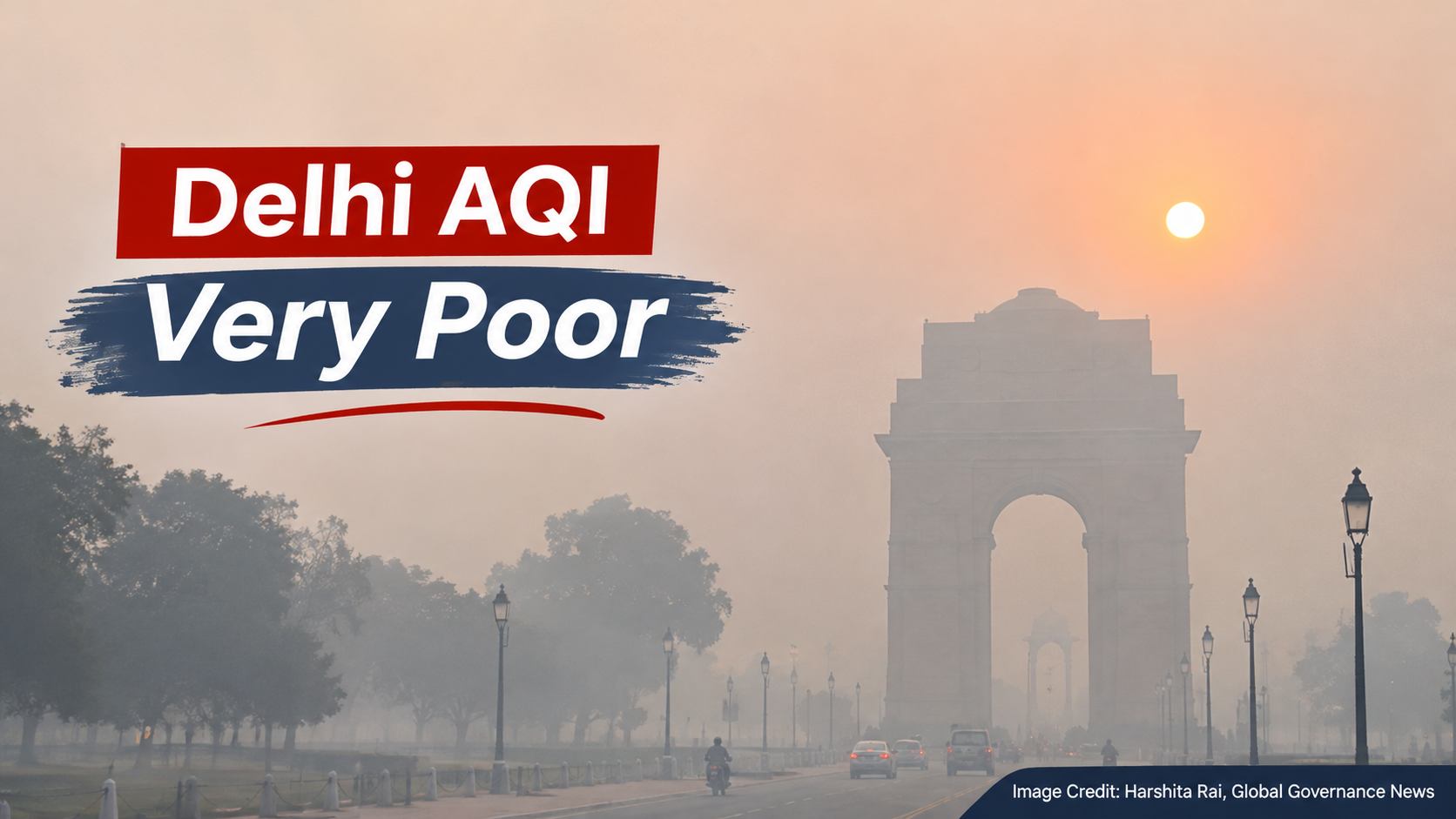
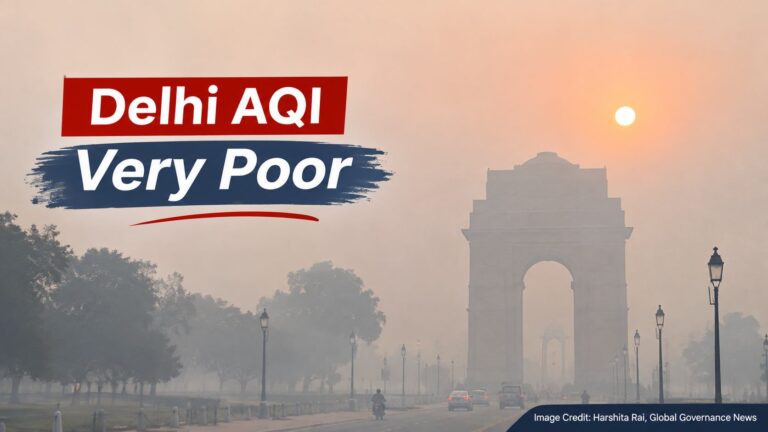
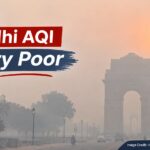
New Delhi, 9th Nov: The Delhi AQI remained in the ‘very poor’ category after Diwali, with a thick blanket of smoke covering parts of the national capital and neighbouring cities. Several areas recorded readings above 400, raising fresh concerns over worsening air quality and visibility.
At 11:05 pm on November 8, Delhi’s overall Air Quality Index stood at 373, according to data available on the CPCB’s Sameer app. Noida recorded an AQI of 319, Ghaziabad 360, Gurugram 280 and Faridabad 297, all falling in the ‘very poor’ category.
Several locations in Delhi, including Alipur, Bawana, Burari, Chandni Chowk, Mundka, Punjabi Bagh, Rohini and Vivek Vihar, recorded AQI levels above 400, placing them in the ‘severe’ category.
The Air Quality Early Warning System had also indicated that Delhi’s air quality was likely to enter the ‘severe’ category from November 9 and remain there for a few days.
The Central Pollution Control Board classifies AQI levels between 0 and 50 as ‘good’, 51 and 100 as ‘satisfactory’, 101 and 200 as ‘moderate’, 201 and 300 as ‘poor’, 301 and 400 as ‘very poor’, and 401 and 500 as ‘severe’.
GRAP Stage 3 Restrictions in Force
Ahead of Diwali, the Commission for Air Quality Management had enforced Stage 3 of the Graded Response Action Plan across Delhi-NCR as a pre-emptive measure amid forecasts of deteriorating air quality.
Despite the restrictions, environmentalists have raised concerns over the enforcement of pollution control measures and the reliability of official air quality readings.
Environmental activist Bhavreen Kandhari questioned whether government monitoring data adequately reflected the pollution levels experienced by residents. She pointed to independent AQI monitors used by citizens and said their readings, along with visible smoke and the continuous sound of firecrackers, raised concerns about the actual pollution burden.
Kandhari also argued that citywide AQI averages could not capture the conditions in individual neighbourhoods. She questioned the effectiveness of restrictions on firecracker use, alleging that violations continued despite designated time windows.
Questions Over Monitoring Data
Kandhari alleged that at least 11 monitoring stations experienced data gaps on November 6. She cited 22 missing hourly PM2.5 readings and 27 missing PM10 readings.
She also pointed to significant outages at IIT Delhi, Nangloi and NSIT Dwarka, including during evening hours.
The concerns have renewed questions about the availability and consistency of air quality data, particularly during the winter season when pollution levels rise across the region.
With GRAP restrictions already in force, the post-Diwali situation has once again brought attention to the enforcement of pollution control measures, neighbourhood-level monitoring and the recurring air quality crisis in Delhi-NCR.