By Anjali Sharma
WASHINGON – US President Donald Trump on Monday has acknowledged that his administration’s deportation policies may have been too harsh and hurt Republicans in the November 3 midterm elections, even as immigration authorities continue enforcement operations with a reported target of approximately 19,000 arrests a week.
Trump acknowledged that his immigration crackdown may have hurt the party.
US officials say ICE has received no orders to reduce enforcement.
Trump conceded that the crackdown had affected undocumented immigrants who had established jobs and lives in the United States, while maintaining that his administration had won support for securing the border and removing people with criminal records.
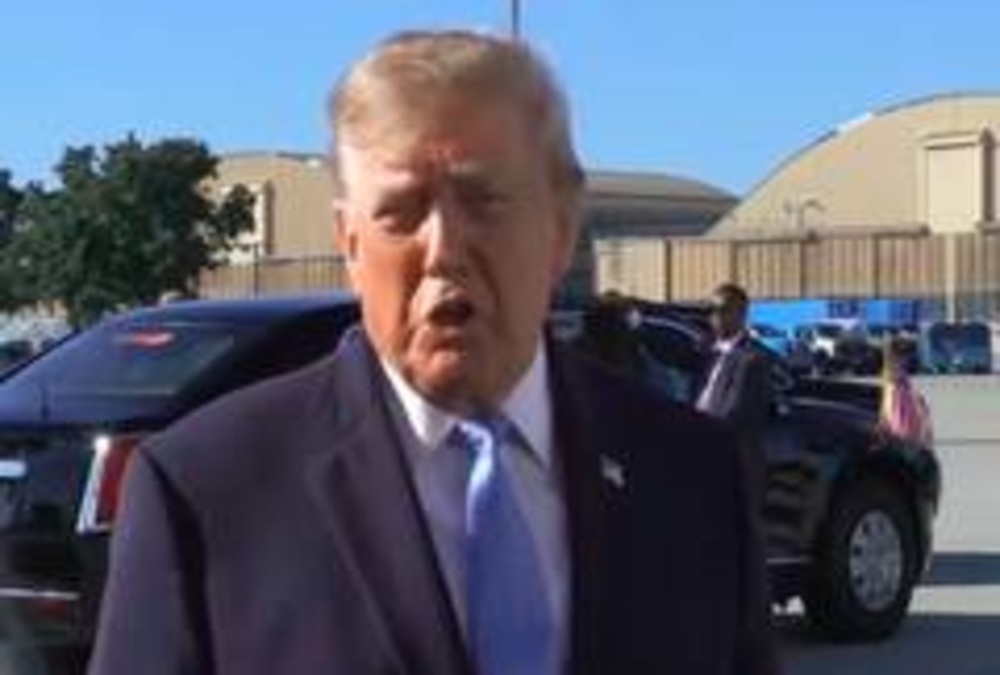
“I think it might be too tough, yeah,” Trump told CBS correspondent Ross Douthat when asked whether his deportation policy had gone too far.
The comments followed significant Republican electoral losses, with Democrats winning control of both chambers of Congress and making gains in traditionally Republican areas, including parts of Texas.
US officials told that the Department of Homeland Security (DHS) and Immigration and Customs Enforcement had received no instructions to reduce enforcement following the elections.
Trump said the crackdown had both helped and hurt his party when asked whether immigration had damaged Republican prospects in the midterms,.
He claimed strong public approval for securing the US-Mexico border and deporting undocumented immigrants with criminal records, but acknowledged the political cost of targeting people whose only offence was entering the country illegally.
Trump pointed to undocumented immigrants employed in landscaping businesses, hotels and other sectors, some of whom had lived in the country for 10 to 15 years.
He said Americans were divided between those who wanted such immigrants deported and those who believed people with established jobs and otherwise law-abiding lives should be allowed to remain.
Trump expressed interest in negotiating an immigration agreement with Democrats, suggested that an arrangement for some long-established undocumented immigrants was possible.
He did not announce a change in deportation policy or provide details of a proposed agreement.
Multiple US officials said that immigration enforcement was unlikely to slow after the midterm results.
According to agency sources cited by the network, ICE officials had been instructed in recent weeks to aim for approximately 19,000 arrests weekly, or about 2,700 a day, compared with an earlier target of 2,000 daily arrests.
The higher target was established before the November 3 elections.
Officials at DHS and ICE had received no instructions to scale back operations after the vote, according to the report.
The White House spokeswoman Lauren Bis said that the administration would not slow its efforts to arrest and deport undocumented immigrants it described as criminals. T
The Department of Homeland Security (DHS) also said on Sunday that Immigration and Customs Enforcement (ICE) would not be “backing away or slowing down”.
Stephen Miller in charge as chief of staff, replaced Susie Wiles. Miller has been closely involved in Trump’s immigration policies, including the deportation drive.
Trump announced the appointment said Miller would assume the position on Monday, November 9.
Several officials told that his promotion suggested the administration would maintain its existing approach despite the electoral backlash.
One official said the opposite was more likely with Miller in charge.
Media exit polls found that 58 per cent of voters nationwide believed the Trump administration’s immigration actions had gone too far.
Republicans retained a narrow advantage over Democrats on which party voters trusted to handle immigration, with 43 per cent choosing Republicans against 41 per cent for Democrats.
The results indicated that opposition to the administration’s enforcement methods did not necessarily translate into a broader preference for Democrats on immigration policy.
Democrats also recorded gains in South Texas and other heavily Latino areas where Republicans had improved their performance during Trump’s 2024 presidential victory.
Immigration and economic concerns were among the issues influencing Latino voters in Texas, according to election reporting.
Trump and administration officials offered a broader explanation for the Republican defeat, pointing to economic affordability, higher fuel prices and the war with Iran rather than attributing the losses primarily to immigration enforcement.
Democrats are due to take control of the House of Representatives and Senate in January 2027, giving them greater authority to investigate the administration’s immigration policies.
The incoming congressional majority could summon officials, demand records and conduct oversight hearings examining deportations and ICE operations.
Theresa Cardinal Brown, a former DHS immigration official, told CBS News that Democrats could also seek restrictions on enforcement funding and challenge policies that allow local law enforcement agencies to cooperate with ICE.
Brown pointed to the substantial funding already available to the agency, including $75 billion allocated through 2029 under legislation signed by Trump in 2025.
The funding could allow enforcement operations to continue despite increased congressional scrutiny.