- India and Italy seek stronger scientific research partnerships.
- Dialogue focuses on clean technology, AI, quantum and biotechnology.
- Dr Jitendra Singh stresses research commercialisation and startup incubation.
- Both countries explore technology transfer and joint R&D opportunities.
GG News Bureau
Rome, 13th Nov: India and Italy have called for stronger scientific research partnerships, with a focus on translating research outcomes into commercial technologies, supporting startups and expanding cooperation in emerging fields.
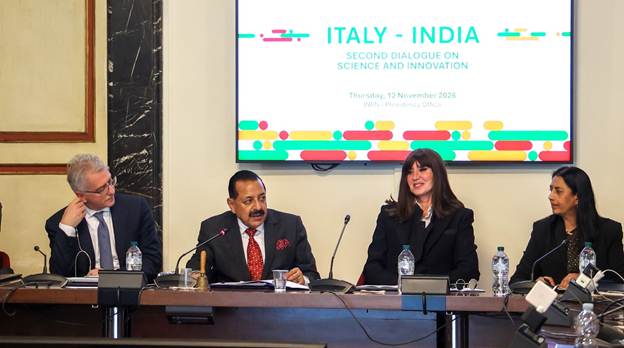
Addressing the concluding session of the Second India-Italy Science & Innovation Dialogue 2026 in Rome alongside Italy’s Minister of University and Research, Anna Maria Bernini, Union Minister Dr Jitendra Singh said targeted international partnerships were essential to advancing innovation, skills and science-driven development.
Singh stressed that cooperation should move beyond research excellence to practical applications, with stronger links between academic institutions, research centres, industries, startups and technology incubation hubs.
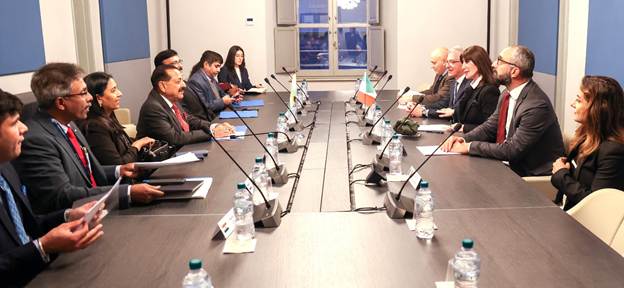
The two-day dialogue focused on three broad areas: clean technology; quantum, artificial intelligence, digital technologies and big data; and biotechnology and health. Discussions also covered technology validation, pilot-scale demonstrations, startup incubation, commercialisation and technology transfer.
Highlighting the longstanding scientific ties between the two countries, Singh recalled that India and Italy signed their first inter-governmental agreement on science and technology in 1978. The agreement provides for exchanges of scientists, joint research projects, industrial research and cooperation in research and innovation policies.
India-Italy relations were elevated to a Strategic Partnership in 2023. The Joint Strategic Action Plan for 2025–2029, announced by Prime Minister Narendra Modi and Italian Prime Minister Giorgia Meloni in November 2024, provides a roadmap for expanding bilateral cooperation.
Existing scientific partnerships cover infectious diseases, physics of matter, new materials, quantum technologies, renewable energy, green hydrogen, cultural heritage preservation and the Sustainable Blue Economy.
Singh also highlighted India’s efforts to strengthen its research and startup ecosystem through initiatives such as the Anusandhan National Research Foundation and the Research, Development and Innovation scheme. He called for greater focus on translational research to help take scientific advances from laboratories to practical use.
The dialogue brought together representatives from academic institutions, research organisations, incubators and technology hubs from both countries. Singh said the discussions could help develop joint models for research, technology transfer, startup incubation and industry engagement.