
CSIR-NBRI Launches India’s First Eco-Educational Hub
Dr Jitendra Singh dedicates 'Prakriti Gyan Dham' in Lucknow, calls for science-driven public outreach

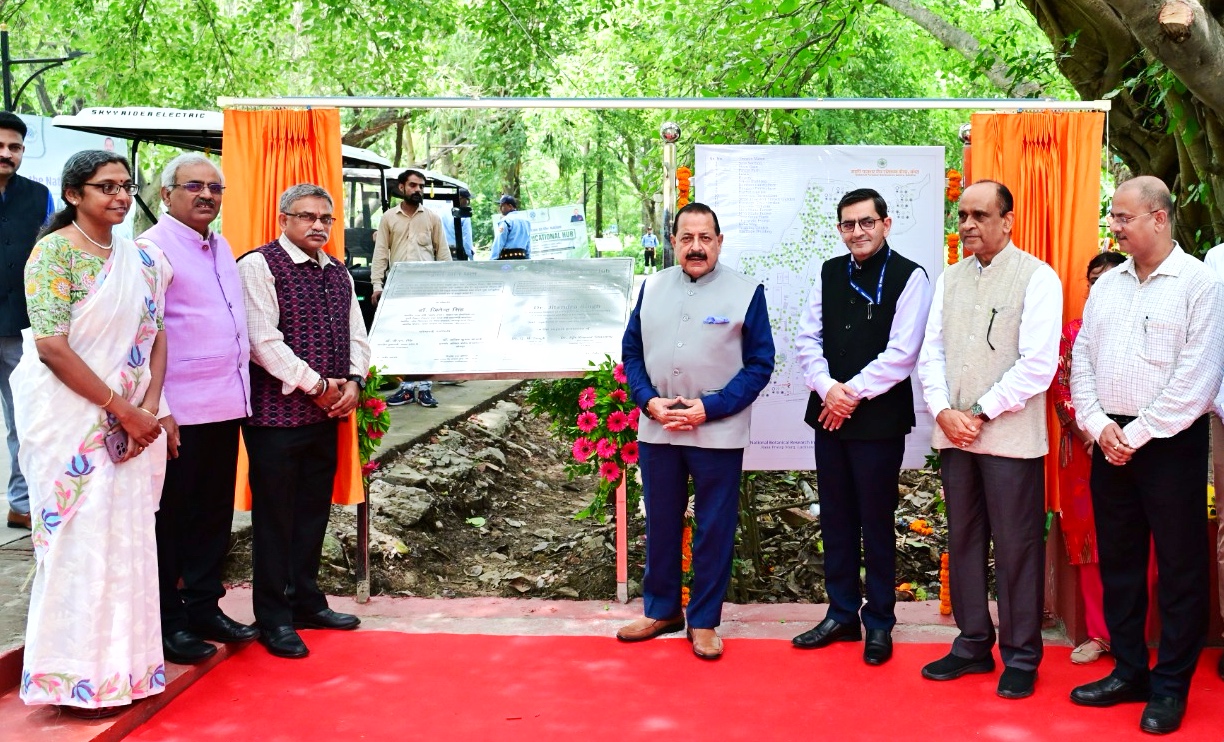
- Dr Jitendra Singh dedicates CSIR-NBRI’s first Eco-Educational Hub.
- ‘Prakriti Gyan Dham’ promotes biodiversity, conservation and experiential learning.
- Minister calls for taking scientific innovations closer to society.
- Several technologies transferred to industry and women-led enterprises.
GG News Bureau
Lucknow, Aug 8: Union Minister Dr Jitendra Singh on Saturday dedicated to the nation the country’s first Eco-Educational Hub, ‘Prakriti Gyan Dham’, developed by the CSIR-National Botanical Research Institute (CSIR-NBRI) at the Maharishi Parashar Bioresource Centre in Banthra, Lucknow.
Speaking at the inauguration, Dr Singh stressed the need to take science beyond laboratories by showcasing technologies, research outcomes and success stories through digital platforms. He said scientific institutions should connect research with livelihoods, entrepreneurship and societal needs while promoting greater collaboration across ministries and departments.
The Eco-Educational Hub has been designed as a living centre for biodiversity conservation, botanical heritage and experiential learning. It features the PAaVan Path heritage trail, the Indian Heritage Garden, Vibhav Enclave for threatened plant species, Bhairav Enclave showcasing state plants, and a Bamboosteum housing 43 indigenous and exotic bamboo species.
During the event, Dr Singh also launched an herbal formulation for male reproductive health developed with Himalaya and oversaw the transfer of four plant-based technologies to Kerala’s Kudumbashree Mission to support women-led entrepreneurship. CSIR-NBRI also transferred a low-cost photobioreactor technology to a Lucknow-based company to strengthen industry-academia collaboration.
The Minister released a documentary on India’s Heritage Gardens and reiterated that integrating traditional knowledge with modern science is essential for addressing environmental and climate challenges while expanding the societal impact of scientific research.
