
Payal’s Voice Will Be Missed in the Corridors of Journalism
A fearless reporter, an instinctive journalist and a colleague who believed in the power of a good story—Payal’s untimely passing leaves a void that will be difficult to fill.

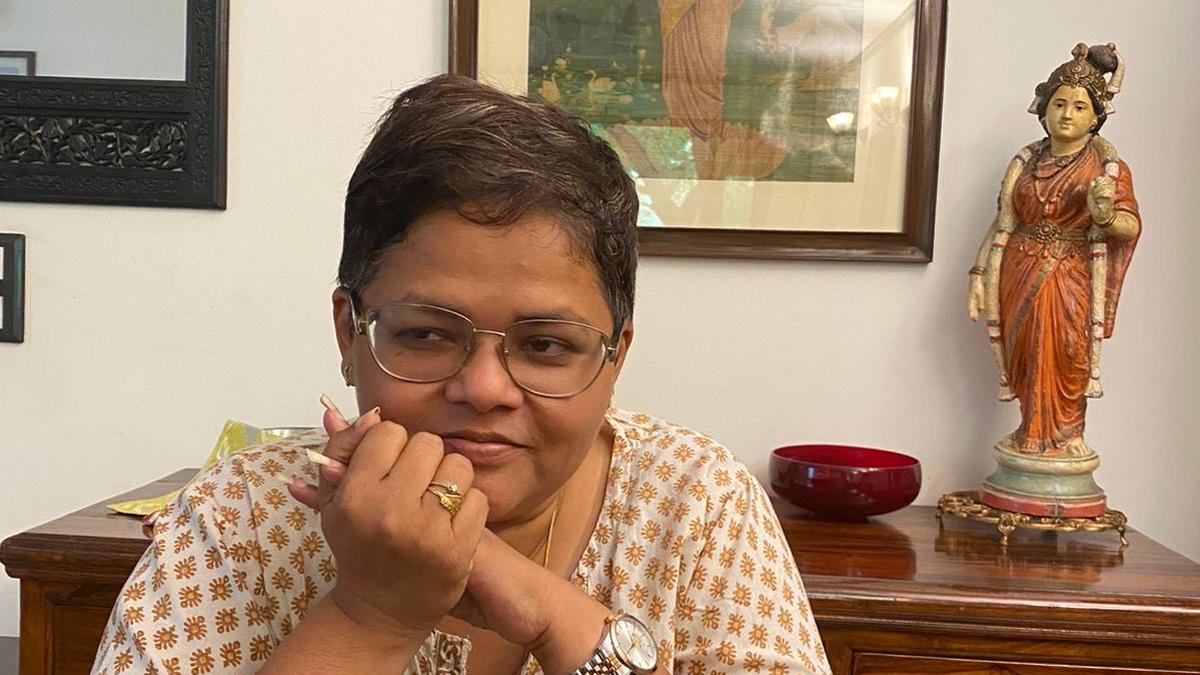
By Kumar Rakesh
When I first heard that Payal was no more, I simply could not believe it.
Could this really have happened?
For a while, several questions kept running through my mind. How could someone so full of energy, so deeply committed to her profession, leave us so suddenly? And at just 46, is that really an age to say goodbye to life?
Payal was not merely a journalist. She was a jounalist in the truest sense of the word—a determined reporter, constantly alert to a story and never hesitant to pursue it. At a time when the media landscape is changing rapidly, reporters with her instinct, courage and persistence are becoming increasingly rare.
Her untimely passing has therefore created a deeply felt void in our journalistic fraternity—one that cannot easily be filled.
Our first interaction
I first spoke to Payal in 2008, when she was associated with the Mumbai bureau of our FOCUS TV group. At that time, I was the Group Editor as well as VP–Content & Development.
I did not interact personally with every reporter every day. But whenever there was an important story, a special programme or a challenging assignment, I would often become involved.
Our Input Head at the time was senior journalist Anju Grover. It was through Anju that I first spoke to Payal.
There was a pending news story. Payal had been trying to obtain a response from the concerned political leader but was unable to get the required byte. I coordinated the matter, and the issue was eventually resolved.
Payal was delighted.
She called me personally to thank me.
She did not really have to. But that was Payal.
She was straightforward, direct and completely unfiltered. She spoke her mind. Some might have described her as outspoken; I saw it as one of her strengths.
For a journalist, the courage to ask difficult questions and speak without fear is invaluable.
The reporter who never gave up
After that, our communication continued.
Payal produced several strong stories from the Mumbai bureau. Among them, there is one particular assignment that I still remember vividly.
She had been trying for almost a month to interview actor-turned-politician Shatrughan Sinha. Despite repeated efforts, she had not been able to secure his time.
She called me and made a special request.
I coordinated the matter.
The very next day, a call came from Shatrughan Sinha’s Mumbai office.
Payal was invited for the interview.
Shatrughan Sinha, whom many affectionately call Shatru Bhaiya, met her along with his family. Payal conducted an excellent interview, and the conversation was subsequently broadcast across all six channels of our group.
But what stayed with me was not merely the interview itself.
Payal was genuinely excited about the achievement. She spoke about the experience with several colleagues across the organisation and even shared it with people outside the group.
That was also Payal’s nature—she valued relationships and took genuine pride in her work.
The lesson about sources
After the episode, I spoke to her about something every good reporter eventually learns.
I told her that there is no big or small journalist in our profession. The reporter who brings the better, stronger and more exclusive story makes the difference.
I also advised her never to reveal her sources.
For a reporter, sources are not merely contacts. They are the foundation of journalism.
Payal took that advice seriously.
Later, we entrusted her with several sensitive and challenging stories. She never went around talking about them or revealing where the information had come from.
Perhaps she had learned an important lesson: a reporter’s credibility depends not only on getting the story, but also on protecting the people who make that story possible.
A journalist’s greatest strength is the team
I have always believed that for any team leader, the team itself is the greatest strength.
Newsrooms work when journalists trust one another, when colleagues cooperate without looking for personal credit and when everyone understands that the story comes first.
Payal understood that spirit.
She was a team player, but she was also fiercely independent when it came to her journalism.
From Mumbai to Delhi
About a year later, Payal moved to Delhi.
She began a new chapter in her personal and professional life and remained in touch over the years. Whenever we met, there was always mutual respect and warmth.
In Delhi, she became an active presence in Parliament and the political corridors.
She gradually built an identity of her own—as a fearless, assertive and committed journalist who was not afraid to pursue a story.
That is how I will remember Payal.
Not merely as a colleague from the Mumbai bureau.
Not merely as a reporter who produced good stories.
But as a journalist who believed that the profession demanded courage, persistence and an instinct for the truth.
A void that cannot easily be filled
Payal’s untimely departure is a loss not only for those who knew her personally, but also for the larger journalistic fraternity.
Newsrooms will continue to function. Stories will continue to be filed. Cameras will continue to roll. Political corridors will remain busy.
But the voice, energy and presence of Payal will be missing.
Some colleagues leave behind files and stories.
Others leave behind memories.
A few leave behind an impression on the people who worked with them.
Payal leaves behind all three.
Her absence will be deeply felt.
May God grant peace to her soul and eternal liberation.
Om Shanti.
