
VP Radhakrishnan Opens India International Water Week 2026
Vice-President stresses water conservation, integrated management and technology-driven solutions for climate resilience

GG News Bureau
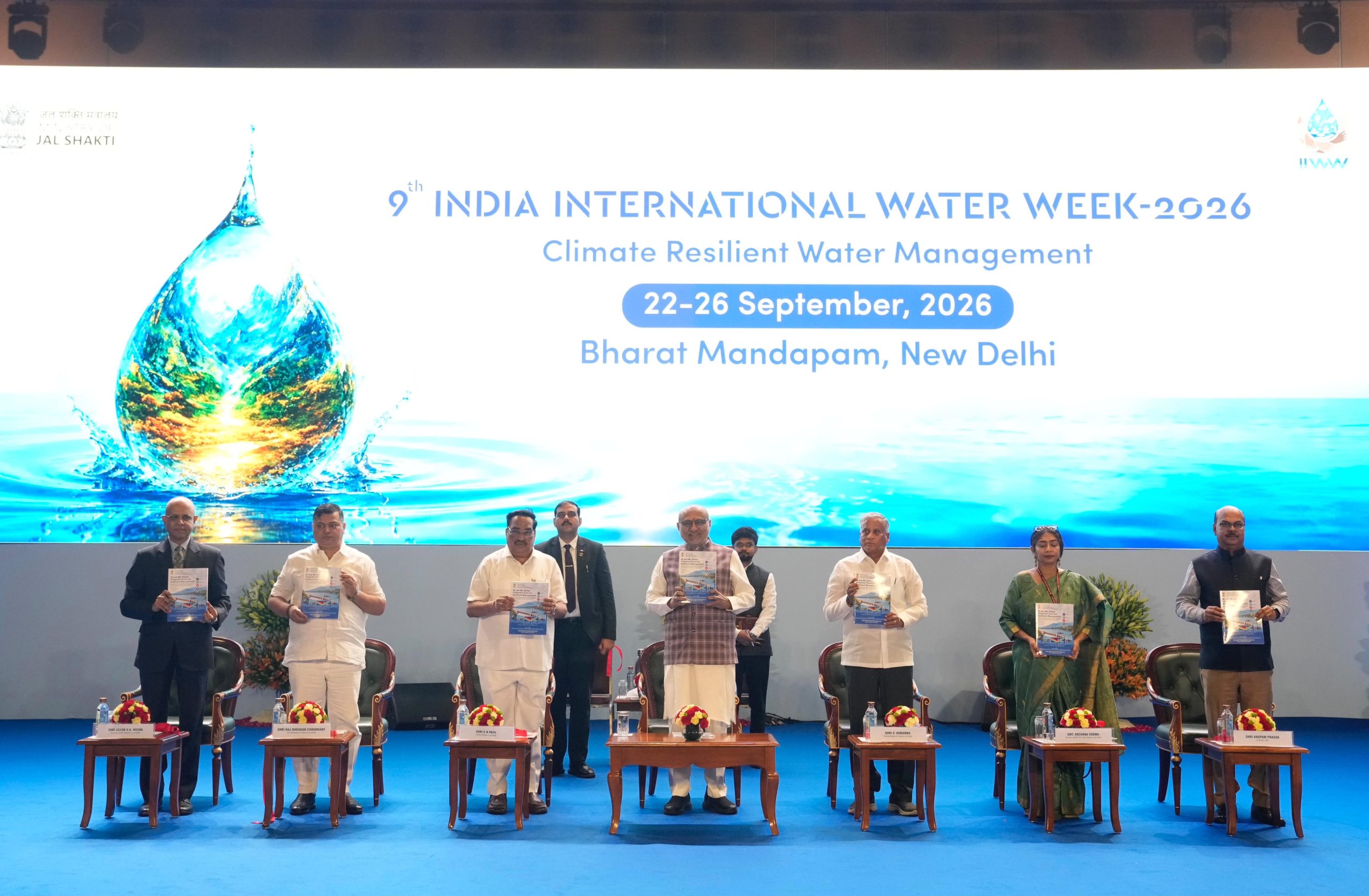
New Delhi, 22nd Sept: Vice-President C. P. Radhakrishnan inaugurated the ninth India International Water Week (IIWW) 2026 at Bharat Mandapam, New Delhi, on Tuesday, calling for judicious use, conservation and integrated management of water resources.
The five-day event, organised by the Ministry of Jal Shakti from September 22 to 26, is being held under the theme “Climate Resilient Water Management.”
Addressing the gathering, the Vice-President described water as the foundation of life and civilisations and stressed the importance of responsible water use. Recalling his childhood experiences in Tamil Nadu, he spoke about witnessing water scarcity and the importance of ensuring access to potable water.
“Saving water is of paramount importance for humanity and the globe,” he said.
Radhakrishnan also recalled his 19,000-km Ratha Yatra across Tamil Nadu more than two decades ago, during which awareness about river interlinking, water conservation and proper management of water resources was among the objectives. He said river interlinking could help address situations where some regions face floods while others experience drought.
Traditional Wisdom and Water Conservation
The Vice-President underlined India’s long-standing civilisational relationship with rivers and said communities had developed traditions for conserving, sharing and managing water over centuries.
He noted that India accounts for about 2.4 per cent of the world’s land area and 18 per cent of its population, while possessing around 4 per cent of global freshwater resources.
Calling for behavioural change, he urged citizens to adopt simple water-saving practices in their daily lives, including reducing water consumption while bathing and turning off taps while brushing.
Integrated Water Management
Radhakrishnan said climate change, rapid urbanisation and population growth were making water management increasingly complex. He called for an integrated approach covering river-basin management, groundwater recharge, rainwater harvesting and efficient irrigation.
He also stressed the importance of greater cooperation among States in resolving water-sharing issues. He highlighted the signing of 10 inter-State MoUs for water sharing and referred to the Kishau Multipurpose Project agreement among six States as an example of inter-State cooperation.
As India moves towards its goal of becoming a developed economy by 2047, the Vice-President said efficient and sustainable water management would be critical. Referring to “Jal Sanchay Jan Bhagidari,” he urged citizens to make water conservation a mass movement.
He further called for greater water-use efficiency, recycling and reuse, particularly in agriculture and industry, and advocated a shift from reactive approaches towards predictive and technology-enabled water management.
SURM Framework, AI/ML Initiative Launched
On the occasion, Radhakrishnan launched the Sustainable Urban River Management (SURM) Framework and AI/ML-driven Integrated Reservoir Sediment Management, marking steps towards technology-enabled and climate-resilient water management.
He said water challenges require a multi-stakeholder and multi-dimensional approach and expressed confidence that the deliberations at IIWW 2026 would contribute to technological, policy, socio-economic and environmental approaches for integrated water management.
Concluding his address, the Vice-President urged participants to share knowledge, build partnerships and strengthen efforts towards water conservation.
“Jal Suraksha will lead to Jan Suraksha and Rashtra Suraksha,” he said.
Union Minister for Jal Shakti C. R. Patil, Ministers of State for Jal Shakti V. Somanna and Raj Bhushan Choudhary, Secretaries Archana Varma and Ashok Meena, Central Water Commission Chairman Anupam Prasad, besides delegates and experts from India and abroad, attended the inaugural programme.
